Most homeowners have walked past their eaves a thousand times without thinking much about them. But the roof overhang is one of the more consequential design elements on any home, affecting moisture control, energy efficiency, curb appeal, and how well the walls and foundation hold up over time. Getting the size and type right for your specific home and climate is not always obvious. This guide covers everything homeowners in Arlington and surrounding areas need to know, from terminology to types to sizing, including how overhang choices interact with the broader roofing system protecting your home.
Here is what you will learn in this guide:
- The correct terminology for overhang components including eaves, soffits, fascia, and rakes
- The most common types of roof overhangs and what each is best suited for
- Standard sizing ranges and how to determine the right projection for your home
- How overhang size affects moisture, energy performance, and siding longevity
- What to look for when inspecting or upgrading your overhang
Why Roof Overhangs Are More Important Than They Look
A roof overhang might appear purely decorative from the street, but it is doing real structural and protective work every day. In climates like Arlington and surrounding areas, where heavy rain, summer heat, and occasional ice events are all part of the annual cycle, an appropriately sized overhang makes a measurable difference in how well the exterior holds up over time. Too short and water runs straight down the siding, accelerating paint failure, rot, and potential foundation moisture intrusion. Too long and the overhang can trap heat, create uplift vulnerability in high winds, or clash with the architectural proportions of the house.
Overhang design also affects energy efficiency in ways that are easy to overlook. Properly designed roof overhangs optimize a home’s temperature by blocking direct sunlight and high summer sun while allowing low winter light to enter through windows. This passive shading effect can reduce cooling costs by up to 15% and lower solar heat gain without any mechanical equipment. In winter, overhangs allow sunlight to warm homes naturally, reducing heating loads as well.
- Moisture management: A roof overhang that extends far enough from the exterior wall directs rainwater away from siding, windows, and the foundation below. Roof overhangs also prolong the life of exterior paint, siding, and window seals by keeping them dry. Most local building codes recommend a minimum of 12 inches for eaves.
- Energy efficiency: Strategic overhang depth shades windows during summer while allowing winter sun to enter, reducing energy costs over the full year. Properly designed overhangs can lower energy costs by 10 to 20 percent depending on climate and orientation.
- Siding and wall protection: Water running directly down a wall with no overhang accelerates deterioration of exterior materials, leading to earlier and more expensive maintenance cycles. Deeper overhangs divert rainwater further from siding, windows, and doors.
- Curb appeal and architectural character: Overhang depth is a defining element of most architectural styles, giving homes their visual proportion and contributing to the home’s curb appeal and streetscape character.
Understanding the functional role of the overhang makes it easier to evaluate whether the one on your home is appropriate for the climate, the roof type, and the structure’s design.
4 Types of Roof Overhangs and What Each One Does
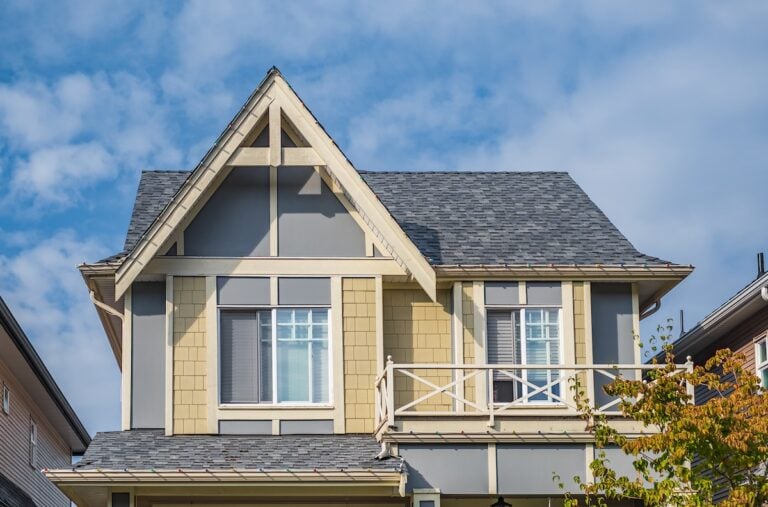
There is more variety in overhang design than most homeowners realize. The type that appears on any given home is usually determined by the roof style, architectural period, local climate during construction, and decisions about cost and aesthetics. Common overhang styles vary across gable roofs, hip roofs, flat roofs, and more complex forms like gambrel and bonnet roofs. Gable roof overhangs extend from the triangular roof ends, while hip roof overhangs wrap around all four sides of the structure. Flat roof overhangs tend to be minimal or absent, particularly on modern architecture where the clean roofline is part of the design intent. Each type has a different relationship to ventilation, maintenance, and visual character. Homeowners in Arlington and surrounding areas dealing with overhang damage or planning a re-roofing project should understand which type they have before discussing repair or replacement options.
1. Open Overhang
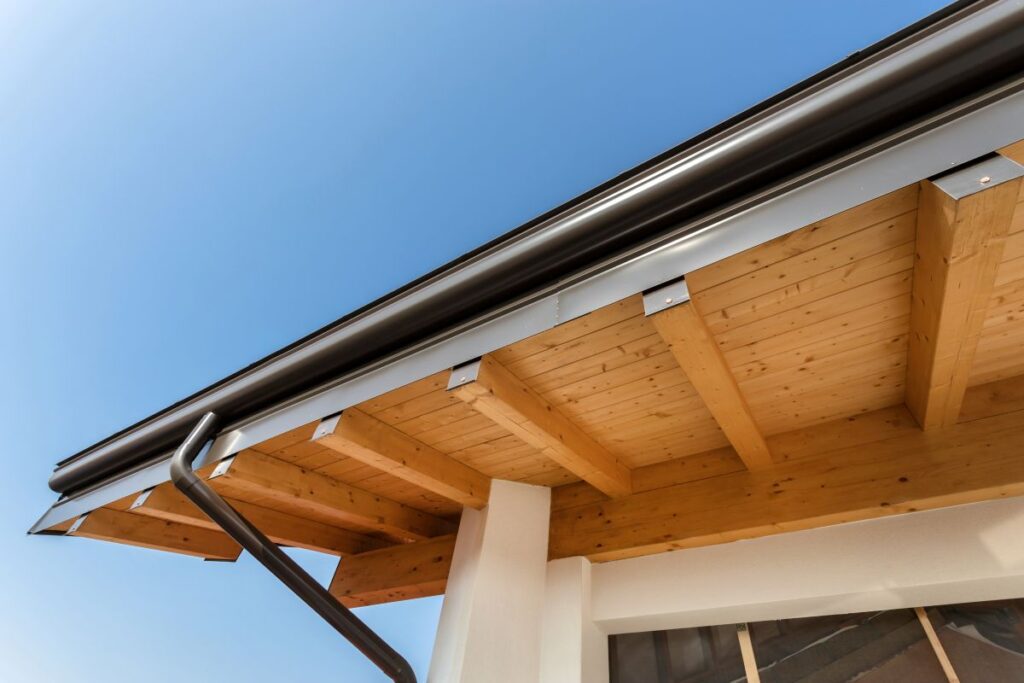
An open overhang exposes the rafter tails and roof decking from below, leaving structural components visible without any covering on the underside. This style is common in craftsman, bungalow, and contemporary designs where exposed wood contributes to the home’s aesthetic character. Open overhangs require the wood to be properly sealed and maintained because the exposed material is subject to moisture, pests, and UV degradation.
- Rafter tails must be painted or stained and resealed regularly
- Provides a traditional, handcrafted visual character
- More prone to pest intrusion if gaps exist in the rafter tail spacing
2. Closed Overhang
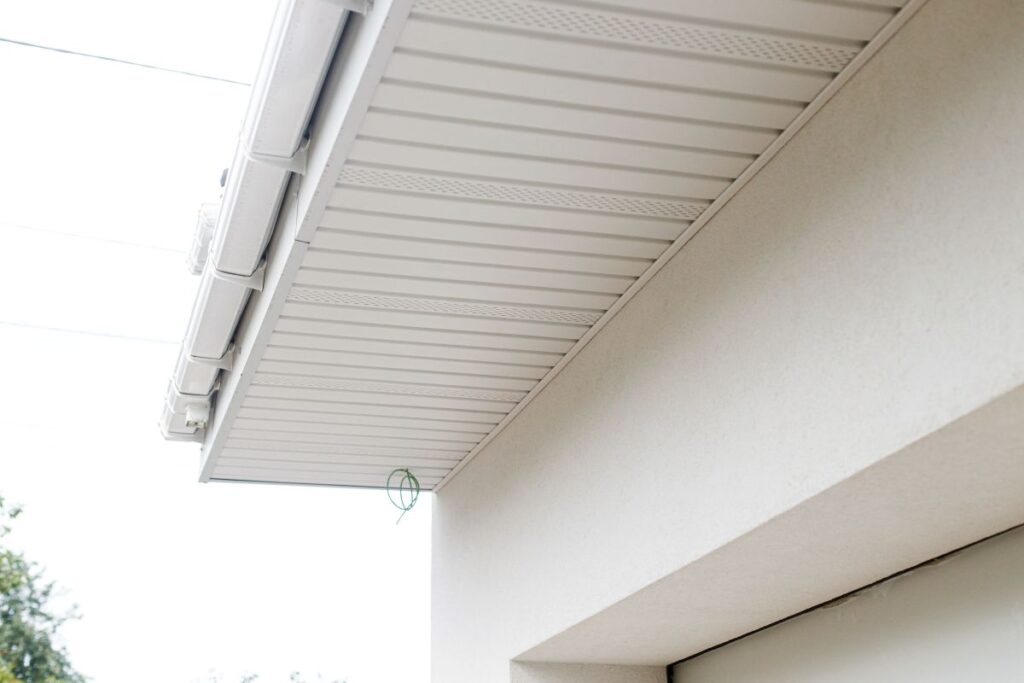
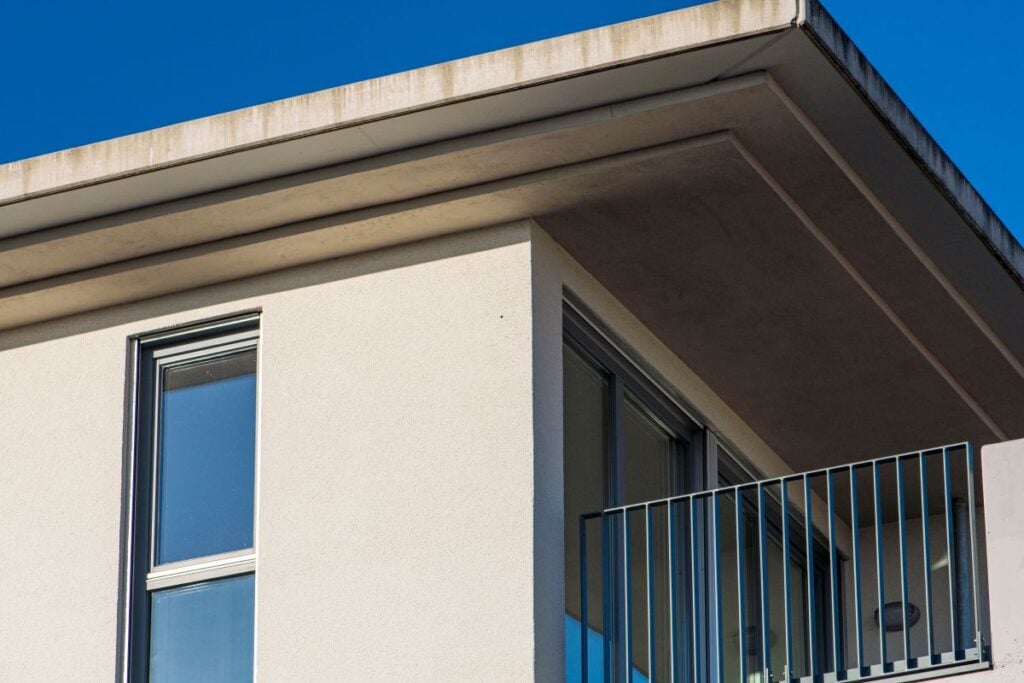
A closed overhang uses a soffit panel to cover the underside of the eave, enclosing the rafter tails and creating a smooth, finished surface from below. This is the most common configuration on modern residential construction because it provides better protection, cleaner aesthetics, and the option to incorporate ventilation through perforated or vented soffit panels. Soffit vents under roof overhangs help control attic moisture and prevent ice dams by maintaining consistent attic airflow. Soffit material can be vinyl, aluminum, fiber cement, or wood.
- Vented soffits allow air into the attic, reducing heat and moisture buildup
- Protects rafter tails from weather exposure and pest access
- Requires periodic inspection for pest entry and ventilation blockage
3. Boxed Overhang
A boxed overhang is a more architecturally detailed version of the closed overhang. It uses framing to create a flat soffit that returns horizontally from the fascia back to the wall, sometimes with molding at the wall connection. Boxed overhangs are common on traditional and colonial-style homes where a clean, symmetrical eave profile is part of the design intent.
- Common on colonial, Georgian, and traditional residential architecture
- Soffit plane is fully horizontal regardless of roof pitch
- Adds visual weight and formality to the roofline
4. Raked Overhang
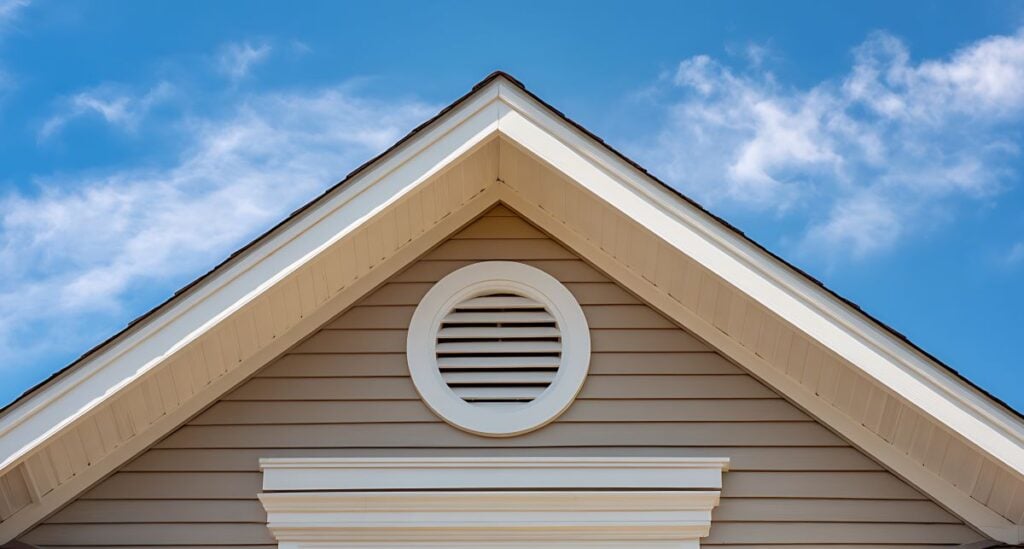
The rake overhang refers to the overhang at the gable end of a roof, running along the sloped edge rather than the horizontal eave. Rakes typically have less projection than eave overhangs, with industry standards suggesting 6 to 12 inches compared to 12 to 24 inches for eaves. The design at the gable end significantly affects how well the gable wall is protected from rain and wind-driven moisture.
- Often called the “rake,” “verge,” or “barge board” depending on the region
- Shorter projection than eave overhangs but critical for gable wall protection
- Fascia board along the rake supports the outer edge of the roof cladding
Each type requires specific maintenance approaches and interacts differently with ventilation, gutters, and wall construction, making correct identification the first step in any overhang repair or upgrade conversation.
Popular Eaves Materials
- Wood: A classic and versatile option with its rich, traditional appeal. However, wood eaves require regular painting and maintenance to protect against moisture and pests.
- Aluminum: Low-maintenance, durable, and offered in a wide range of colors. While it’s not prone to rot, it can dent and corrode over time.
- Vinyl: Affordability and minimal upkeep make vinyl a popular choice. However, extreme weather can cause it to become brittle.
- Fiber Cement: Resistant to moisture, fire, pests, and damage, fiber cement eaves can mimic the look of wood without its vulnerabilities.
- Metal: For a contemporary, sleek look, metal eaves are a durable, low-maintenance option.
Roof Overhang Terminology: What Everything Is Called
The overhang involves several components that homeowners often confuse or conflate. Knowing the correct terminology helps when reading estimates, reviewing building codes, or describing a problem to a contractor. These terms are consistent across the roofing industry.
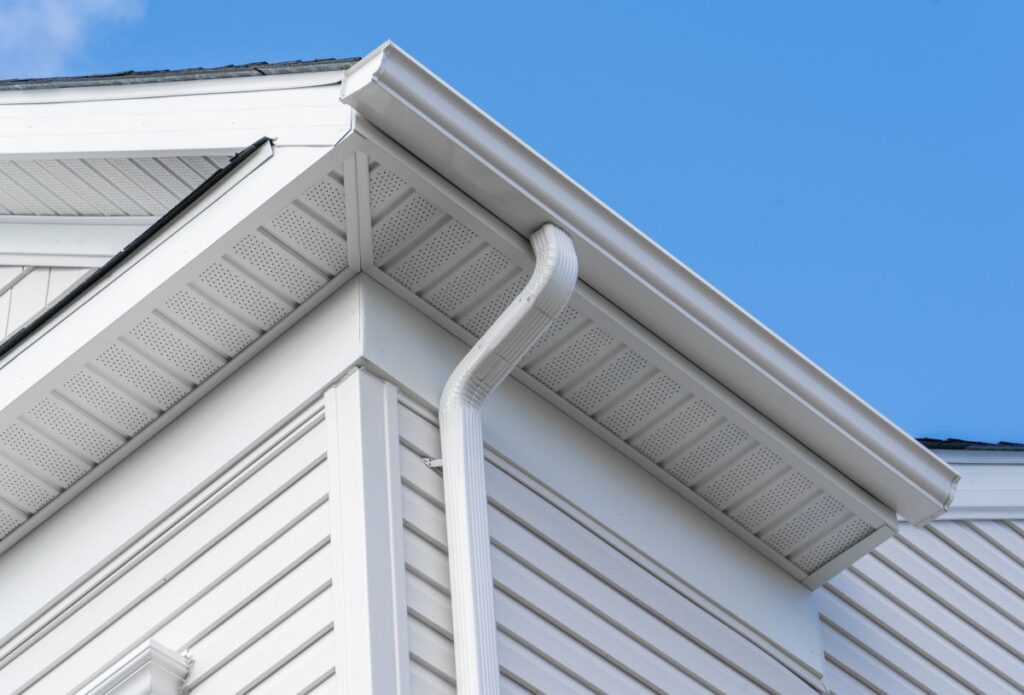
- Eave: The horizontal edge of the roof that extends beyond the exterior wall. In common usage, “eave” and “overhang” are often used interchangeably.
- Soffit: The material covering the underside of the overhang, spanning horizontally from the fascia back to the wall. Soffits may be vented or unvented. Shallow eaves typically use soffits 8 to 12 inches wide, moderate eaves require 12 to 20 inches, and deep eaves can demand 30 inches or more depending on the projection of the overhang.
- Fascia: The vertical board running along the lower edge of the roof, capping the rafter tails and providing a mounting surface for gutters. The fascia is the most visible overhang component from the street and is often the first to show damage when gutters overflow or pull away.
- Drip edge: A metal flashing installed at the roof edge that directs water off the deck and away from the fascia, preventing water from wicking back under the shingles. Many older homes lack proper drip edge, which is a common cause of hidden fascia rot.
- Rake: The sloped edge of a gable roof running from the eave up to the ridge. The board along the rake is sometimes called the barge board or rake board.
Getting these terms right matters when reviewing a contractor’s proposal. An estimate referencing soffit replacement addresses a different scope than one including fascia and drip edge, even if the homeowner cannot distinguish between them from ground level.
How Eaves Outsmart Water
- Direct water away from your home’s walls, reducing erosion and moisture buildup.
- Prevent splashing onto walkways and walls, averting unsightly marks and wear.
- Guard against ice dams in cold climates, a barrier to potential roof damage and consequential leaks.
Gutters and downspouts work in harmony with eaves by:
- Collecting water directed away by the eaves.
- Guiding water to a safe distance from the foundation.
- Preventing the build-up of ice and standing water in eaves during colder seasons.
Standard Roof Overhang Sizes and What Affects Them
There is no single universal standard for overhang depth, but industry practice and building codes provide useful reference points. For eaves, the typical range is 12 to 24 inches. For rakes, it is 6 to 12 inches. Most codes establish a minimum of 12 inches for eaves to direct water adequately away from walls and foundations. Several factors influence where a specific home’s overhang should fall within or outside these ranges.
Climate and Rainfall
Homes in regions with heavy rainfall or intense sunlight benefit from deeper overhangs that move water and shade further from the wall. Southern climates generally require wider roof overhangs than northern climates for this reason. In high-wind zones, however, very deep overhangs can create uplift forces during storms and may require additional structural support at the rafter tail connections. In Arlington and surrounding areas, where both heavy summer rain and occasional high-wind events occur, eave overhangs in the 18-to-24-inch range tend to perform well for most residential roof styles. Shorter overhangs of 6 to 12 inches are more common in snowy areas where ice dams and uplift risk are the primary concerns.
Roof Pitch
Steeper pitches naturally position the overhang edge further from the exterior wall at the same horizontal projection distance. A 6-inch overhang on a steep pitch provides more effective wall protection than a 6-inch overhang on a low-slope roof because the angle of the rain shadow is more favorable. Roof pitch and overhang depth work together as part of the overall roof structure and should be evaluated as a system rather than in isolation.
Architectural Style
Ranch homes and mid-century modern houses often feature overhangs of 24 inches or more as part of their design language. Cape Cods and colonials typically use shorter eaves in the 12-to-16-inch range to match their proportions. A well-designed overhang can increase a home’s property value by enhancing its curb appeal and improving energy performance. Changing overhang depth significantly during re-roofing can require structural modifications to the existing structure, so any change should be planned deliberately with a qualified contractor.
Maintaining Your Overhang
- Inspect Regularly: Check for signs of damage, such as peeling paint, sagging, or visible holes.
- Keep Clean: Clear eaves of leaves, debris, and nests to prevent water backup and pests from causing damage.
- Monitor Gutters: Make sure your gutters are in good repair and free of blockages to maintain proper water management.
- Cut Branches: Prevent damage from falling limbs and eliminate a potential pathway for pests onto your roof.
Quickly addressing eave maintenance will save you from more extensive and expensive repair work down the line. Any signs of damage should be addressed by a professional to ensure the structural integrity remains intact.
Make Sure Your Overhang Is Working for Your Home
A well-designed and properly maintained roof overhang protects your siding, windows, foundation, and interior from the moisture, heat, and weather exposure that accumulates over time. In a climate like Arlington and surrounding areas, the overhang is doing real work every season, and when it is undersized, deteriorating, or missing components like drip edge or vented soffits, those gaps compound into larger repairs. Roof Troopers serves homeowners throughout Northern Virginia with thorough roof assessments and honest guidance on what needs attention and what can wait. When you are ready to get a clear picture of your roof’s condition, contact us today and we will take care of the rest.
Don’t pay for your roof until 2027!
0% APR, same as cash for 24 months
Get Started Today!
"*" indicates required fields