


For most business owners, the roof is out of sight and out of mind until a ceiling tile starts dripping onto a desk or a stockroom shelf. That’s a costly way to learn how much protection a roof provides. Understanding commercial flat roofing helps you choose the right roofing system, plan for realistic costs, and avoid the surprises that interrupt daily operations. A smart plan starts with knowing your system options and committing to a dependable roof over your business that holds up season after season.
A quick look at what’s ahead:
- The four most popular flat roofing materials and how they compare
- Rough cost ranges for installation and replacement
- What drives the price of a commercial roofing project
- A practical maintenance routine that extends roof life
Why the Right Flat Roof Protects Your Bottom Line
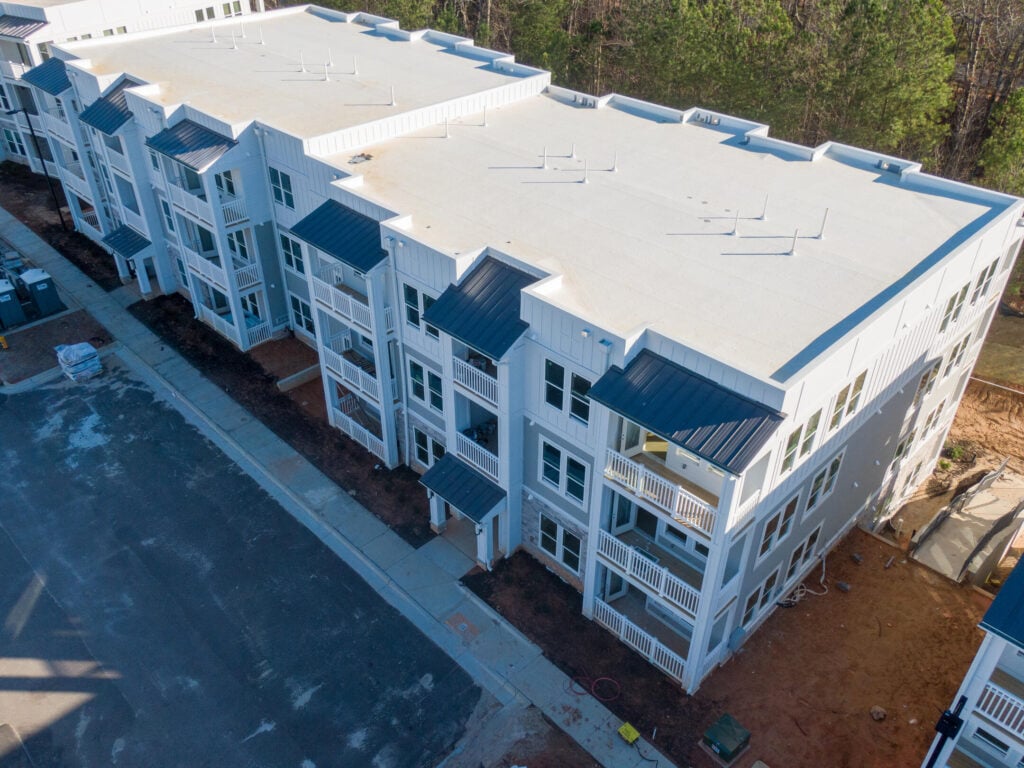
A commercial roof shelters inventory, equipment, employees, and customers, so its performance affects far more than the building itself. Flat and low slope roofing designs are the standard choice for most commercial buildings because they cover large footprints efficiently and leave room for rooftop equipment.
- Controls long term costs: Quality commercial roofing materials and a solid installation reduce emergency repairs, while poor materials often lead to a leaky roof and an early replacement.
- Protects business operations: A leak in an office, retail space, or warehouse can force closures, damage products, and frustrate tenants.
- Improves energy efficiency: Reflective membranes that bounce back UV rays and proper insulation help keep cooling costs in check during hot Northern Virginia summers.
- Supports property value: A well maintained roof is a selling point for buyers, lenders, and prospective tenants.
For commercial property owners in Arlington and surrounding areas, these benefits add up quickly given the mix of humid summers, heavy storms, and freeze and thaw cycles in cold weather. Choosing a long term solution at the start sets the tone for decades of reliable performance.
4 Common Commercial Flat Roofing Materials
Most commercial flat roofing systems fall into one of four categories, ranging from single ply systems to layered asphalt options. Each brings its own strengths, price point, and maintenance needs, so the best fit depends on your building needs, budget, and how long you plan to own the property. All cost figures below are rough industry estimates for installed systems.
1. TPO (Thermoplastic Polyolefin)
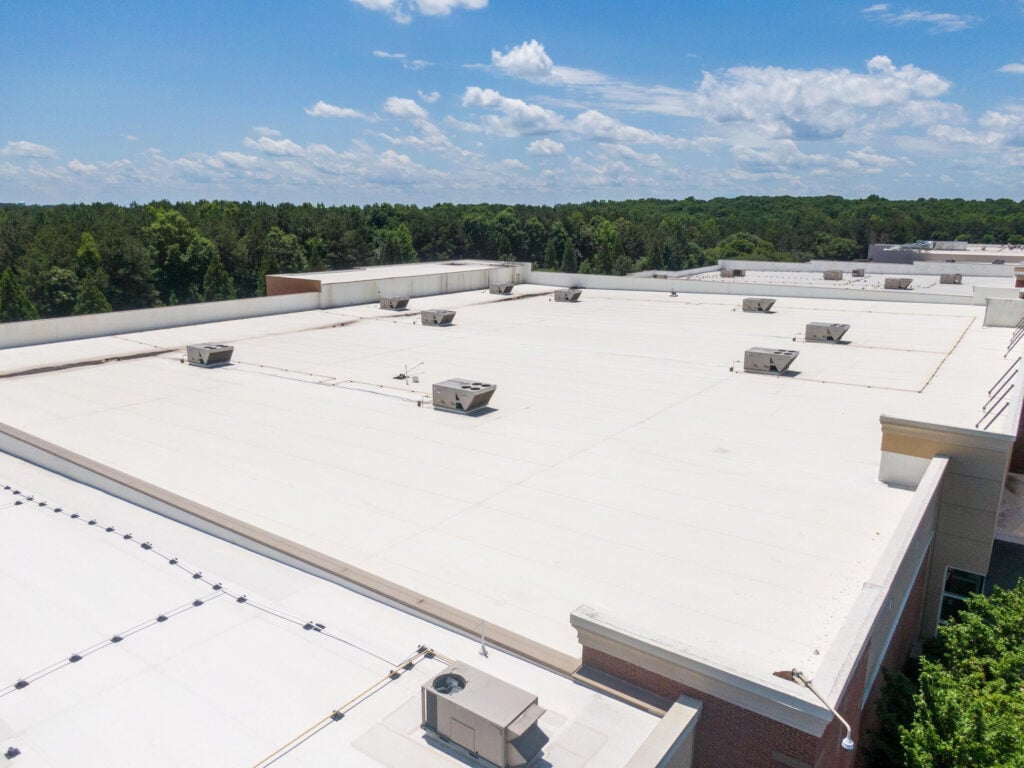
TPO roofing is a single ply membrane known for its bright white, reflective surface. It can be fully adhered or installed by mechanically attaching it to the roof deck, and the seams are heat welded, which creates a strong, watertight bond that resists leaks at the joints.
- Rough installed cost: $6 to $12 per square foot
- Typical lifespan: 20 to 30 years
- Strong energy efficiency thanks to its reflective surface
2. EPDM (Rubber Roofing)
EPDM, short for ethylene propylene diene monomer, is a durable synthetic rubber membrane that has been used on commercial buildings for decades. It handles temperature swings well and is relatively simple to repair when damage occurs.
- Rough installed cost: $5 to $10 per square foot
- Typical lifespan: 25 to 30 years
- Usually black, which absorbs more heat unless a reflective coating is added
3. PVC (Polyvinyl Chloride)
PVC roofing membranes are another single ply option with heat welded seams, but they’re typically more rigid and chemical resistant than TPO. That makes PVC roofing a smart choice for restaurants and facilities that vent grease, oils, or other chemicals onto the roof.
- Rough installed cost: $7 to $14 per square foot
- Typical lifespan: 20 to 30 years
- Excellent resistance to fire, chemicals, and punctures
4. Modified Bitumen
Modified bitumen roofing is an asphalt based system installed in layers with reinforcing fabrics, often finished with a granulated top surface that shields it from ultraviolet light. Mod bit systems can be torch applied, cold applied, or self adhered depending on the building. It offers strong puncture resistance and holds up well to foot traffic from maintenance crews.
- Rough installed cost: $5 to $10 per square foot
- Typical lifespan: 15 to 20 years
- A good fit for roofs with frequent rooftop equipment servicing
No single material wins in every situation. Other system options include built up roofing, often called BUR systems, and metal roofing for certain low slope applications, while some buildings use hybrid systems that combine layers from more than one approach. A restaurant, a medical office, and a storage warehouse may each be best served by a different system, which is why a careful assessment of your building matters before you commit.
What Drives the Cost of a Commercial Flat Roof
The price per square foot is only part of the story. On a typical commercial building covering 10,000 square feet, a full roof replacement can range from roughly $50,000 to $140,000 depending on the material and the scope of work. Several factors influence where your project lands within that range.
- Roof size and shape: Larger roofs lower the cost per square foot, but irregular layouts with many corners and edges require more labor.
- Tear off versus overlay: Removing the existing roof raises the upfront cost, though it allows crews to inspect and repair the deck underneath.
- Insulation requirements: Adding or upgrading rigid insulation improves energy performance and may be needed to meet current building codes.
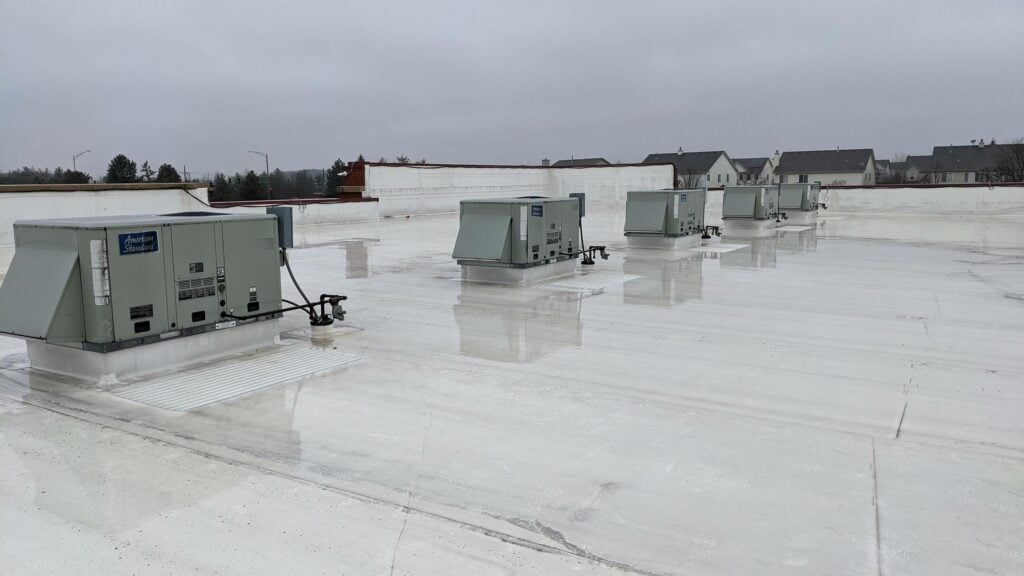
- Rooftop penetrations: HVAC units, vents, skylights, and drains all need careful flashing, which adds time and materials.
- Drainage improvements: Correcting areas where water pools may require tapered insulation or new drains.
- Access and scheduling: Tight sites, multistory buildings, and work scheduled around business hours can affect labor costs.
Permits, disposal fees, and the condition of the roof deck can also shift the final number. A detailed, in depth estimate from your roofing contractor is the best way to understand exactly what you’re paying for and why.
Maintenance That Keeps Your Flat Roof Performing
A flat roof can easily reach the high end of its expected lifespan with consistent care, or fall well short of it without attention. Because water drains more slowly on a flat surface, small problems tend to grow faster than they would on a steep residential roof.
A Simple Seasonal Routine
Most commercial roofs benefit from professional inspections at least twice a year, typically in spring and fall, plus additional inspections after major storms.
- Clear debris from drains, scuppers, and gutters so water exits the roof quickly
- Look for ponding water that remains more than 48 hours after rain
- Inspect seams, flashing, and the areas around rooftop equipment
- Watch for blisters, cracks, punctures, or membrane shrinkage
Repair, Restore, or Replace
When problems appear, the right response depends on the roof’s age and the extent of the damage. The table below offers a general guide.
| Option | Best For | Rough Cost | What to Expect |
| Targeted repair | Isolated leaks, seam failures, or punctures | A few hundred to a few thousand dollars | Quick fix that extends roof life |
| Roof coating or restoration | Aging but structurally sound membranes | Often $2 to $5 per square foot | Adds years of service at a fraction of replacement cost |
| Full replacement | Widespread damage, wet insulation, or a roof past its lifespan | Often $5 to $14 per square foot | A new roof with a fresh lifespan and warranty |
Catching issues early often keeps you in the repair or restoration column rather than facing a full replacement. Building owners in Arlington and surrounding areas who schedule regular inspections tend to spend less over the life of the roof and deal with far fewer emergencies.
Frequently Asked Questions About Commercial Flat Roofing
Property owners and facility managers often share the same questions when planning a flat roof project. Here are clear answers to some of the most common ones.
How long does a commercial flat roof last?
Most commercial flat roofs last between 15 and 30 years, depending on the material, the installation method, and maintenance. EPDM, TPO, and PVC systems typically sit at the higher end of that range with proper care.
Which flat roofing material is the most energy efficient?
White single ply membranes like TPO and PVC are generally the most energy efficient because they reflect sunlight and reduce heat absorption. This can lower cooling costs during the summer months.
Can a new flat roof go over the existing one?
In some cases, yes, if the current roof is dry, structurally sound, and local codes allow another layer in the roof assembly. A thorough inspection is the only way to know whether an overlay is a safe option.
Is ponding water a serious problem?
Yes. Water that sits on a flat roof for more than two days can break down membranes, add weight to the structure, and lead to leaks. Ponding usually signals a drainage issue that should be corrected.
Can my business stay open during a roof replacement?
Most businesses can remain open during the work. Roof Troopers assigns a project manager to every site to coordinate scheduling, safety, and communication so disruptions stay to a minimum.
Every building has its own quirks, so these answers are a starting point rather than a final recommendation. A professional assessment will give you the clearest picture of your roof’s condition and options.
Keep Your Business Covered With Confidence
Your commercial roofing system protects everything that keeps your business running, and the right materials paired with consistent maintenance make that protection last. Roof Troopers is a fully insured Class A Building Contractor licensed in the Commonwealth of Virginia, bringing drone inspections, an in house crew, and honest recommendations to every project.
Whether you’re weighing a repair, planning a replacement, or looking for a maintenance routine or roofing solution that fits your building, property owners in Arlington and surrounding areas can count on clear communication from start to finish. Contact us today to schedule an inspection and get a straightforward plan for your roof.
Don’t pay for your roof until 2027!
0% APR, same as cash for 24 months
Get Started Today!
"*" indicates required fields


