

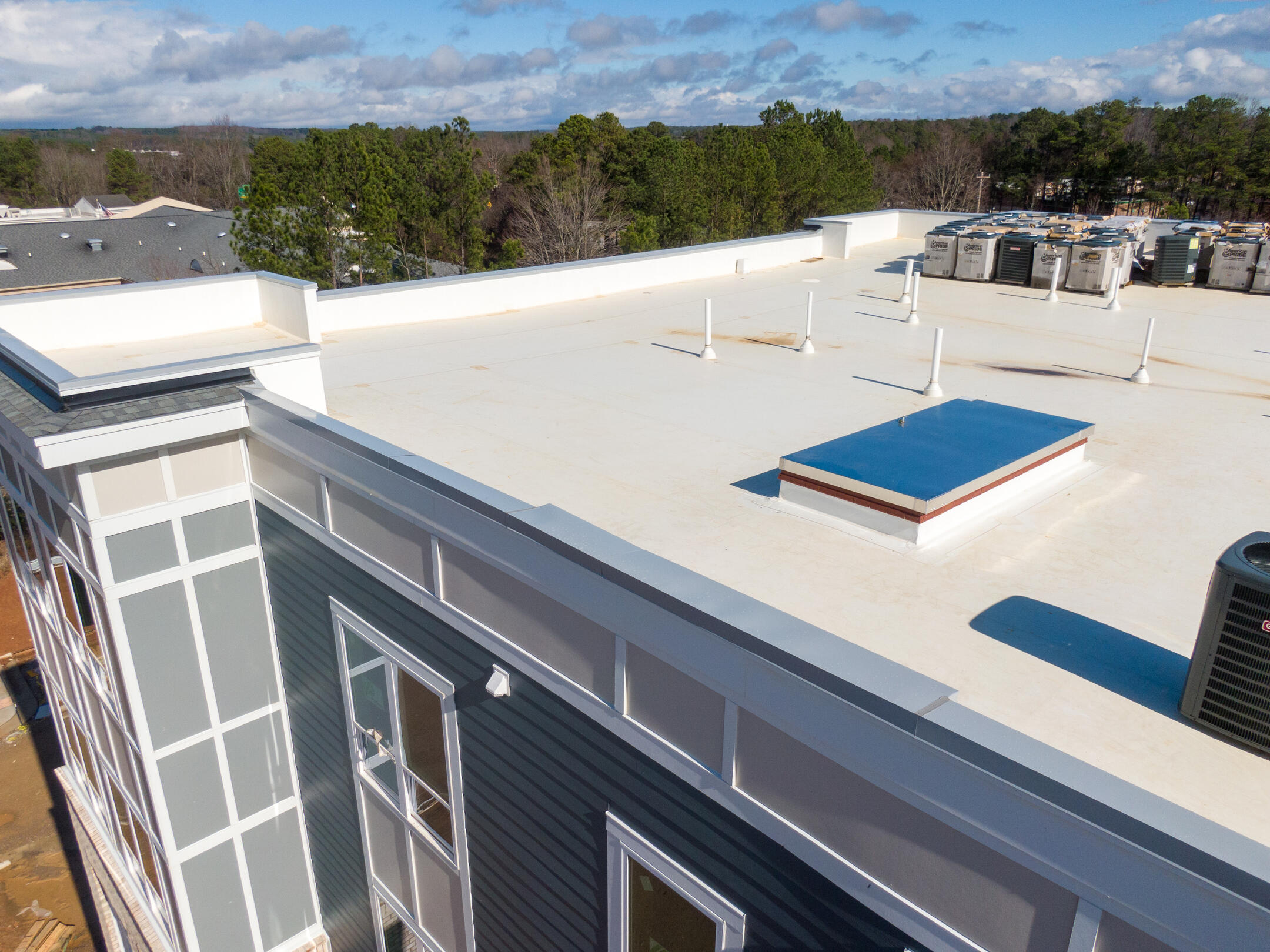

If you own or manage a building with a flat or low slope roof, such as a warehouse, retail center, office, church, or multifamily property, TPO has almost certainly come up as an option for your commercial roofing project. It’s one of the most widely used single ply membranes in the country, valued for its reflective white surface and heat welded seams. The TPO roofing cost on your bid depends on far more than the membrane itself, from thickness and insulation to rooftop equipment and how the crew works around your daily operations. Understanding those details makes it easier to compare bids, plan your capital budget, and choose a roof that protects your building for decades.
Here’s a quick preview of what’s ahead:
- Rough per square foot price ranges for commercial TPO roofing
- Eight factors that push your price up or down
- How to read a commercial TPO estimate line by line
- What TPO costs over the full service life of the roof
Why the Per Square Foot Price Tells Only Part of the Story
Most commercial TPO proposals are presented as a price per square foot, which makes comparing contractors look simple. In reality, two bids with similar numbers can describe very different roof systems, because membrane thickness, insulation, and attachment method can shift the price significantly from one proposal to the next.
For property owners and facility managers, knowing what’s inside that number pays off in several ways:
- Avoids apples to oranges comparisons: You can spot when one bid includes tear off and code compliant insulation while another doesn’t.
- Prevents surprise change orders: Understanding deck repairs and flashing details upfront reduces costly additions halfway through the project.
- Protects long term asset value: A thicker membrane or upgraded insulation may cost more today but deliver more years of service before the next capital expense.
- Supports smarter energy decisions: TPO’s reflective surface and the insulation beneath it both affect how hard your rooftop HVAC units work during summer.
For commercial properties in Alexandria and surrounding areas, where flat roofs cover everything from strip centers to older mixed use buildings, this knowledge is especially useful. As a rough industry estimate, most commercial TPO projects land somewhere between $4.50 and $10 per square foot installed, and the factors below explain where your building falls in that range.
8 Factors That Shape Your Commercial TPO Price Per Square Foot
Every TPO roof is built from the same basic layers, but the choices made at each layer add up quickly on a large commercial roof. Here are eight of the biggest influences on your final price, with rough estimates where they help.
1. Membrane Thickness
TPO is commonly manufactured in 45, 60, and 80 mil thicknesses. Thicker membranes cost more but offer better puncture resistance against foot traffic from HVAC technicians and a longer expected lifespan.
- 45 mil: the most budget friendly option, often used on lower traffic roofs
- 60 mil: the most common choice for commercial buildings
- 80 mil: the most durable option for long term ownership and heavy rooftop traffic
2. Roof Size
Commercial roofs benefit from economies of scale. Setup, equipment, and mobilization costs get spread across more square footage, so a 30,000 square foot warehouse will usually cost less per square foot than a 3,000 square foot office building, even with identical materials.
3. Tear Off Versus Recover, Including Deck Condition
Removing the existing roof adds labor and disposal costs, often around $1 to $2.50 per square foot depending on how many layers are present. Building codes typically allow a single recover over one existing roof that’s dry and sound, which can save money. A tear off, however, lets the crew inspect the steel, concrete, or wood deck underneath and repair rust, rot, or wet insulation before the new system goes down. Deck repairs are usually priced separately per sheet or per square foot.
4. Insulation and Energy Code Requirements
Insulation sits beneath the membrane and has a major effect on both price and performance. A full replacement often triggers current energy code requirements, which can mean adding more rigid insulation than the old roof had.
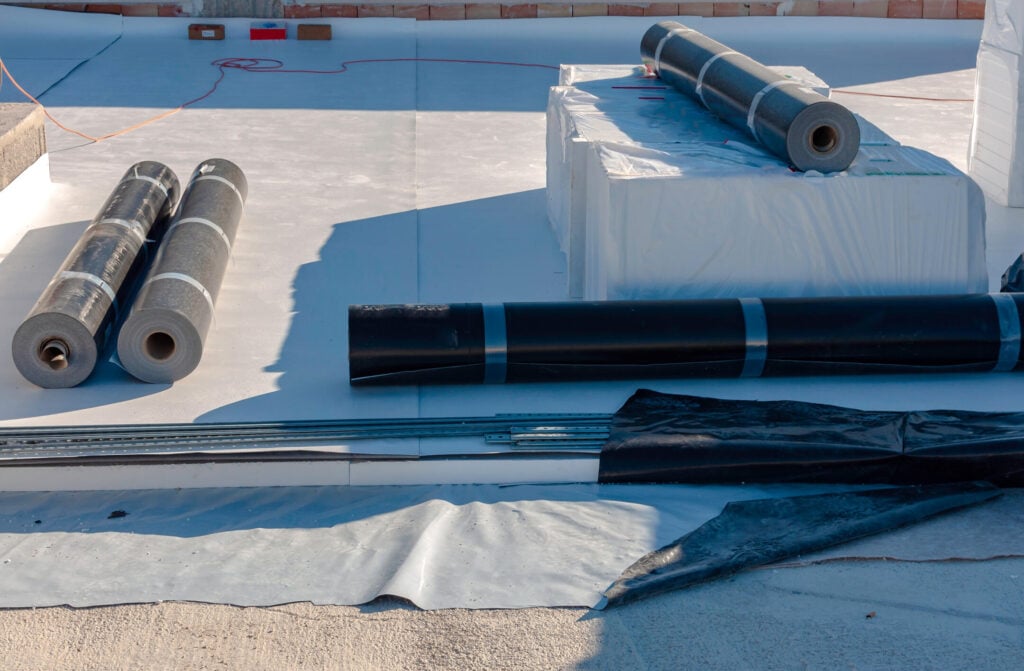
- Polyiso is the most common insulation under commercial TPO
- Tapered insulation corrects ponding water and poor drainage
- Cover boards add durability and fire resistance over the insulation
5. Attachment Method
TPO can be mechanically fastened, fully adhered with bonding adhesive, or ballasted with stone on roofs that can carry the extra weight. Mechanically fastened systems are often the most economical for large commercial roofs, while fully adhered systems cost more but offer strong wind uplift resistance and a smoother finished surface.
6. Rooftop Equipment and Penetrations
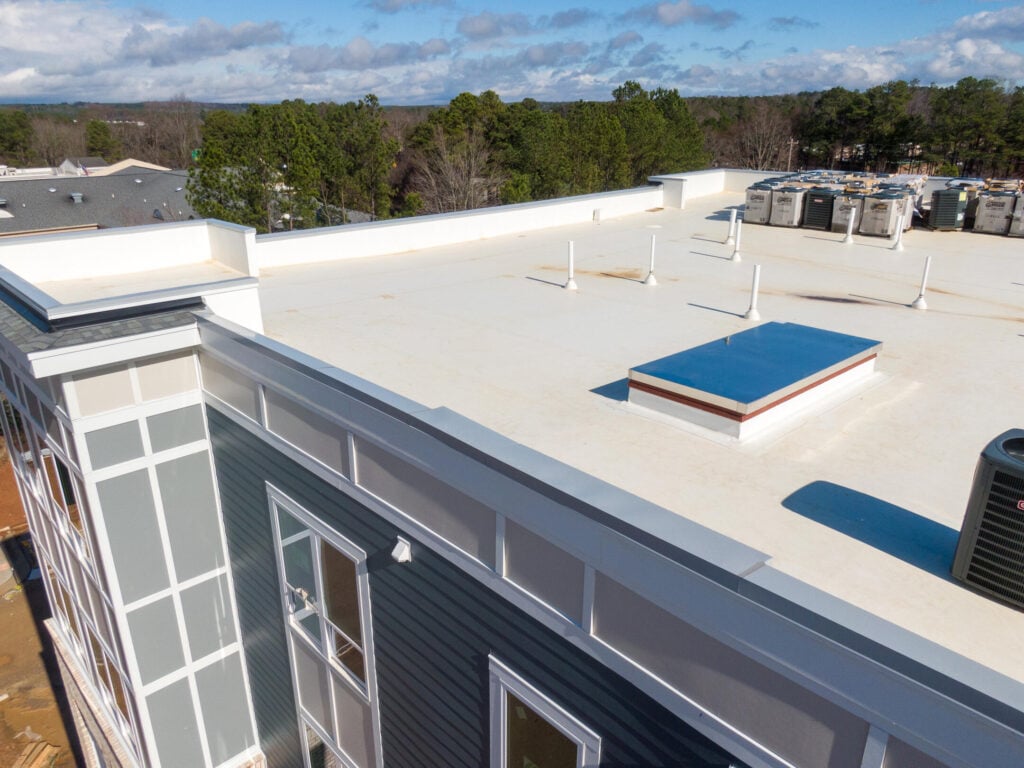
Commercial roofs tend to be crowded. HVAC units, exhaust fans, skylights, roof hatches, plumbing vents, drains, and conduit all require custom flashing and heat welded details. Curbs may need to be raised to meet code, and some units may need to be disconnected and reset, which can involve coordination with your mechanical contractor.
7. Access, Staging, and Business Operations
A single story retail building with open parking is far easier to stage than a four story building on a tight urban lot. Cranes, hoists, street closures, and limited material storage all raise labor costs. Many businesses also need work scheduled around operating hours, tenant access, or customer traffic, and phased installation or off hours work can affect the price.
8. Warranty Level
Manufacturers offer warranty tiers based on membrane thickness, system design, and installation requirements. Longer system warranties, including no dollar limit coverage, typically require specific components and manufacturer inspections, which add to the upfront cost but give owners stronger protection.
Most of these factors interact. Upgrading to 80 mil membrane, for example, can open up a longer warranty tier, and adding tapered insulation can reduce drainage repairs down the road. That’s why a detailed conversation about your building and ownership plans matters as much as the final number.
How to Read a Commercial TPO Estimate Line by Line
A strong commercial proposal makes it easy to see exactly what you’re paying for. If any of these items are missing or vague, ask your contractor to clarify before signing.
Membrane specification: The proposal should list the manufacturer, thickness, and color of the TPO membrane.
Scope of removal: Look for a clear statement on whether the existing roof is being torn off or recovered, how many layers are coming off, and how debris will be handled on site.
Insulation and cover board: Confirm the insulation type, thickness, total R value, and any tapered system or cover board included.
Attachment method: The proposal should state whether the system is mechanically fastened, fully adhered, or ballasted.
Flashing and equipment details: Check that curbs, penetrations, edge metal, and wall flashing are included rather than billed later.
Deck repair allowance: A fair proposal explains how damaged decking will be priced if it’s discovered during tear off.
Scheduling and site logistics: Look for notes on staging, crane use, work hours, and how the crew will protect occupants and tenants.
Warranty terms: Both the manufacturer warranty and any workmanship coverage should be spelled out in writing.
A thorough proposal protects your budget and shows the contractor actually evaluated your roof. Roof Troopers uses drone inspections and a hands on review of problem areas to build estimates that reflect the real condition of your building.
Why Lifetime Value Matters More Than the Lowest Bid
The lowest bid isn’t always the best investment once you factor in how long the roof will last. Thinking in terms of cost per year of service gives owners and facility managers a clearer picture for capital planning.
| Option | Rough Installed Cost (per sq ft) | Expected Lifespan | Approximate Cost Per Year (per sq ft) |
| 45 mil TPO, code minimum insulation | About $4.50 to $6 | 15 to 20 years | Around $0.30 |
| 60 mil TPO, standard insulation | About $6 to $8 | 20 to 25 years | Around $0.31 |
| 80 mil TPO, upgraded insulation | About $8 to $10 | 25 to 30 years | Around $0.33 |
What the Numbers Suggest
The yearly cost stays fairly close across all three options, but thicker systems push the next replacement further into the future and typically improve energy performance along the way. For a building owner, that means fewer disruptions to tenants and operations and a longer gap between major capital expenses.
When a Budget Option Makes Sense
A thinner membrane can still be a smart choice for a building you plan to sell or redevelop within a few years, or for a low traffic roof with little rooftop equipment. The key is matching the system to your ownership timeline.
Commercial owners in Alexandria and surrounding areas often find that 60 mil TPO with standard insulation offers the best balance of price and performance. Your contractor should help you weigh these trade offs honestly rather than defaulting to the most expensive package.
Frequently Asked Questions About Commercial TPO Roofing Cost
TPO decisions involve big numbers, so questions are common. Here are straightforward answers to the ones building owners ask most often.
Is TPO a good choice for commercial buildings?
Yes. TPO is one of the most popular commercial flat roof systems because of its heat welded seams, reflective surface, and competitive installed cost. It works well on warehouses, retail centers, offices, and multifamily buildings.
How long does a commercial TPO roof last?
Most commercial TPO roofs last between 15 and 30 years depending on membrane thickness, installation quality, rooftop traffic, and maintenance. Regular inspections and prompt repairs help a roof reach the upper end of that range.
Why is my commercial TPO quote higher than averages I found online?
Online averages often reflect very large roofs that benefit from economies of scale. Tear off, code required insulation, deck repairs, crowded rooftop equipment, and difficult access can all raise the price for your specific building.
Can TPO be installed over my existing commercial roof?
Sometimes. If there’s only one existing roof layer and it’s dry and structurally sound, a recover may be allowed. A core sample or infrared scan helps confirm whether trapped moisture makes a full tear off the better choice.
Will a TPO installation disrupt my business?
Some noise and staging activity is unavoidable, but a well planned project keeps disruption manageable. Phased work, clear communication with occupants, and protected entrances help your building stay open during installation.
Can TPO be repaired if it’s damaged?
Yes. Punctures and seam issues can usually be repaired by heat welding new membrane over the damaged area, which keeps maintenance relatively simple and affordable.
Every commercial roof is different, so these answers are a starting point rather than a final number. A professional inspection gives you the clearest picture of what your project should cost.
Get a Clear, Honest Commercial TPO Estimate
Knowing what drives the per square foot price puts you in control when comparing commercial TPO bids. Roof Troopers is a family owned, fully insured Class A Building Contractor licensed in the Commonwealth of Virginia, with an in house crew and project managers on every site.
If your commercial property in Alexandria and surrounding areas has a flat or low slope roof that’s nearing the end of its life, we’ll inspect it carefully and walk you through your options without pressure. Contact us today to schedule an inspection and get a transparent estimate for your building.
Don’t pay for your roof until 2027!
0% APR, same as cash for 24 months
Get Started Today!
"*" indicates required fields


