


Those dark streaks running down your shingles aren’t dirt or soot. In most cases, they’re a hardy, airborne blue green algae called Gloeocapsa magma that feeds on the limestone filler in asphalt shingles and thrives in humid weather. Proper roof algae removal restores your home’s curb appeal, but the method matters just as much as the result. The wrong approach can strip protective granules and shorten your roof’s life. Here’s how professionals handle black streaks safely and how to keep your shingles looking clean and protected for years to come.
In this guide, you’ll find:
- What causes black streaks and why some roofs get them first
- The five steps contractors follow to treat roof algae safely
- How common cleaning methods compare
- Simple ways to slow algae from coming back
Why Black Streaks Deserve More Than a Shrug
Roof algae often starts as a cosmetic issue, but it rarely stays that way if it’s ignored for years. Treating it the right way protects both the look of your home and the shingles themselves, and experts generally recommend the gentlest cleaning method possible to avoid damaging the roof surface.
- Restores curb appeal: Streaked shingles can make an otherwise well kept home look older and neglected, which matters if you plan to sell.
- Protects shingle health: Algae colonies create trapped moisture against the roof shingles and feed on shingle materials, which can lead to granule loss and premature failure if left untreated.
- Helps manage heat: Dark streaks absorb more sunlight, which can make attic spaces warmer during the summer months.
- Reveals hidden issues: Cleaning often exposes problems that the staining was hiding, such as worn shingles, lifted tabs, or early storm damage.
For homeowners in Falls Church and surrounding areas, mature tree canopy and humid summers create ideal conditions for algae growth. Addressing an algae problem early keeps a simple cleaning from turning into a bigger roofing conversation later.
5 Steps Contractors Follow to Treat Roof Algae
Professional algae treatment isn’t about blasting the roof clean. It’s a careful process designed to kill the algae, protect the shingles, and keep your landscaping safe from cleaning solutions.
1. Inspect and Confirm the Problem
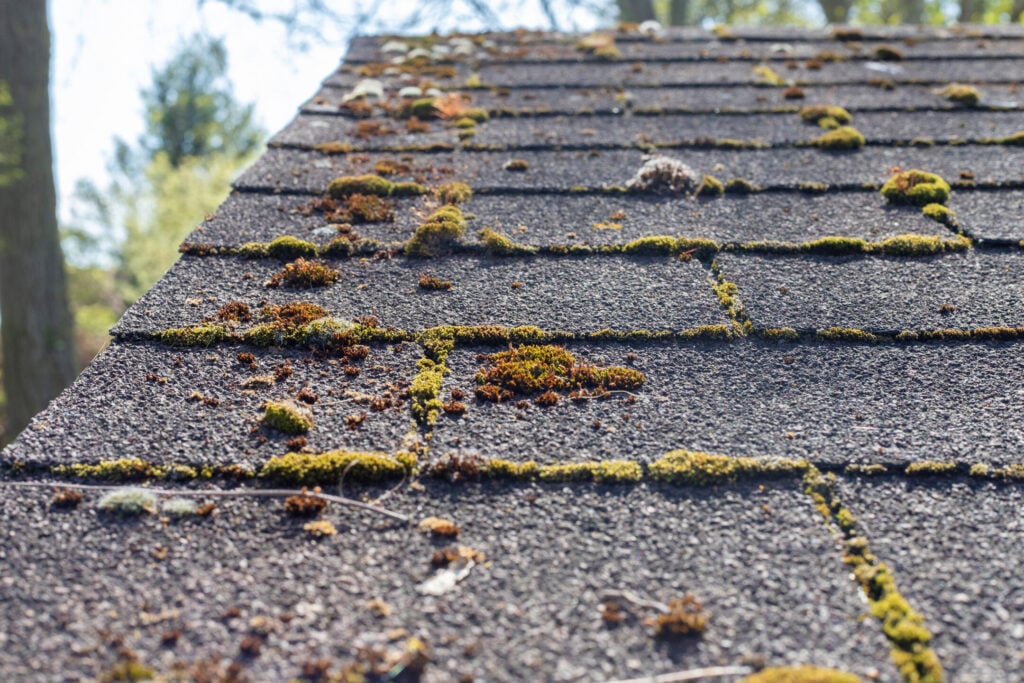
Before any cleaning begins, a professional should confirm that the streaks are actually algae. Moss, lichen, mold, and certain types of shingle wear can look similar from the ground, and each one calls for a different approach.
- Black or dark gray streaks usually indicate algae
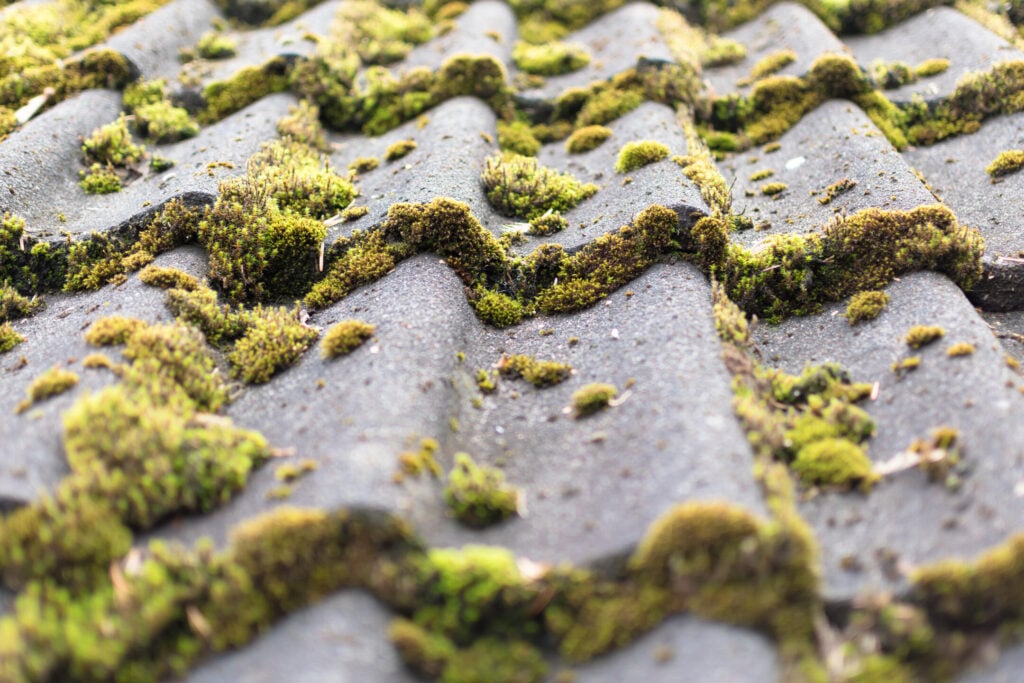
- Green, fuzzy patches point to moss growth, which can lift or curl shingles
- Crusty, flat spots that cling tightly are often lichen
A drone or close up inspection also reveals any damaged shingles or signs of water intrusion that need repair before cleaning.
2. Protect the Surrounding Property
Cleaning solutions can harm plants, grass, and some exterior surfaces if they aren’t managed carefully. Crews typically rinse plants before and after treatment and cover delicate plants near the drip line.
- Pre wetting shrubs and flower beds with a garden hose
- Covering sensitive plants with breathable tarps
- Directing downspouts away from gardens during treatment
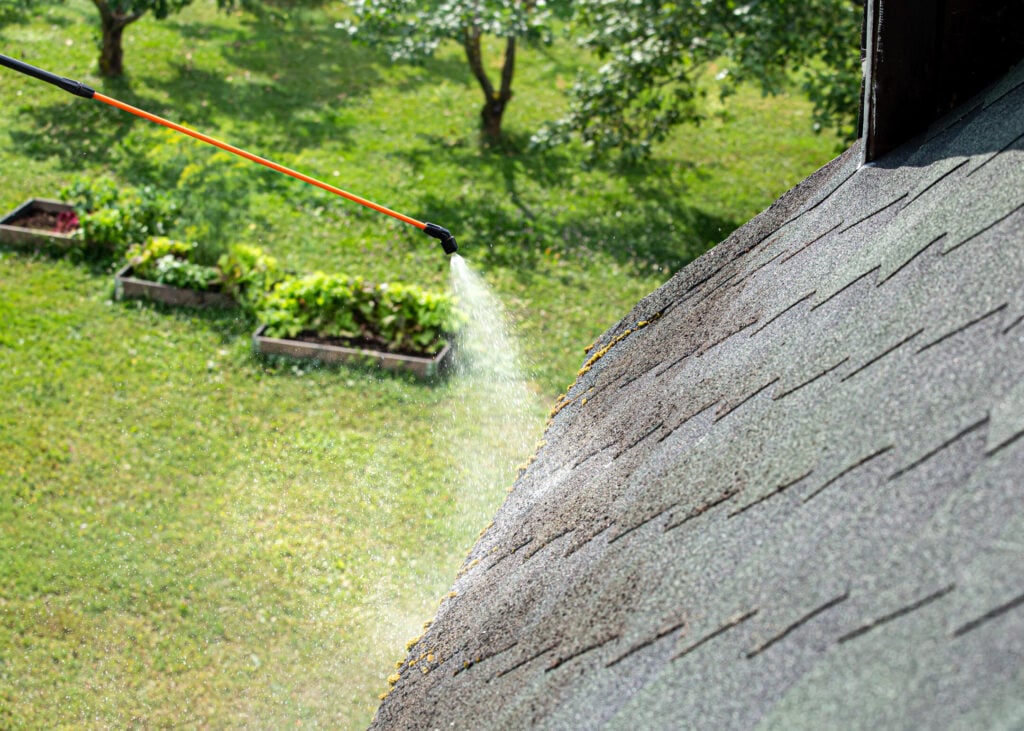
3. Apply a Low Pressure Cleaning Solution
The most common professional method is soft washing, which uses a diluted cleaning solution applied at low pressure. The solution kills the algae at its root rather than relying on force to scrape it away.
- Solutions typically use diluted sodium hypochlorite as the active ingredient, sometimes with trisodium phosphate, or commercial cleaners that contain biocides
- Oxygen bleach offers a gentler, eco friendly alternative on some roofs
- Bleach is never mixed with ammonia or other chemicals, which can create toxic fumes
- Application starts at the bottom of the roof and works upward
- Low pressure prevents water from being driven under the shingles
4. Allow Dwell Time and Rinse Gently
Once applied, the solution needs time to work. Depending on the severity of the staining, a crew may let it dwell for roughly 15 to 20 minutes before rinsing with low pressure water. Some stubborn streaks continue to fade over the following days as rain washes away the dead algae.
5. Add Long Term Prevention
Cleaning alone won’t stop algae from returning, since airborne spores travel from roof to roof. Prevention steps slow regrowth and help the roof stay cleaner for longer.
- Adding zinc strips or copper strips near the ridge
- Trimming overhanging tree branches to let in more direct sunlight
- Keeping gutters clean, often with a quick pass from a leaf blower, so moisture doesn’t linger at the roof edge
Following these steps in order gives you a clean roof without sacrificing the shingles underneath. When a contractor skips straight to cleaning without an inspection or prevention plan, the results rarely last.
What Makes Some Roofs More Prone to Algae
Not every home on the street develops black streaks at the same rate. A handful of environmental and design factors explain why algae settles on some roofs first and spreads faster once it arrives.
- Shade and slope direction: North facing roof sections and areas under heavy tree cover stay damp longer, giving algae more time to grow.
- Humidity and rainfall: Warm, wet summers like those in Northern Virginia create an ideal environment where algae grows quickly.
- Shingle composition: Asphalt shingles contain limestone filler that algae feed on, which is why these roofs are the most commonly affected.
- Light shingle colors: Streaks show up more clearly on lighter shingles, so homeowners often notice small spots before they spread.
- Neighboring roofs: Because spores travel through the air, algae on nearby homes can spread to yours over time.
- Clogged gutters: Overflowing gutters keep the lower edge of the roof wet, which encourages growth along the eaves.
Many homeowners in Falls Church and surrounding areas notice streaks on the shaded side of the house first. Knowing these risk factors helps you spot early organic growth and decide when treatment or prevention makes sense.
Comparing Common Algae Removal Methods
There are several ways to tackle black streaks, but they aren’t equally safe or effective. The table below compares the most common approaches so you can understand the trade offs. As a rough estimate, professional cleaning typically runs from a few hundred dollars to around $3,000 depending on roof size, pitch, and how heavy the staining is.
| Method | How It Works | Pros | Cons |
| Soft washing | Low pressure application of a diluted cleaning solution | Kills algae while protecting shingle granules | Requires professional equipment and landscape protection |
| Pressure washing | High pressure water stream from a pressure washer | Removes surface stains quickly | Strips granules, can drive water under shingles, and may put warranties at risk |
| DIY cleaning | Store bought or homemade solution, often a 50:50 mix of bleach and water, applied with a pump sprayer | Low upfront cost | Roof work is dangerous, takes significant time and effort, and results may be uneven |
| Algae resistant shingles | Copper infused granules discourage growth | Long term prevention built into the roof | Best installed during a roof replacement |
Why Pressure Washing Is a Bad Idea
High pressure water may make a roof look clean for a moment, but it knocks loose the protective granules that shield shingles from UV rays. That damage can shorten the roof’s lifespan and lead to leaks well before the shingles should wear out.
When Replacement Becomes the Better Option
If your roof is nearing the end of its lifespan and algae keeps returning, new shingles may offer more value than repeatedly cleaning algae off aging shingles. A replacement often runs roughly $10,000 to $25,000 for an average home, so it makes the most sense when the shingles are already near the end of their life. Many shingle lines from manufacturers like CertainTeed include algae resistant granules that help prevent streaks for years, and metal roofing also resists the type of algae that feeds on asphalt.
Choosing the right method depends on your roof’s age, condition, and how often algae comes back. A professional assessment can help you decide whether cleaning, prevention, or a new roof makes the most sense.
Frequently Asked Questions About Roof Algae Removal
Black streaks raise plenty of questions for homeowners. Here are clear answers to some of the most common ones.
Is roof algae harmful to my shingles?
Roof algae is mostly a cosmetic problem at first, but long term growth can hold moisture against the roof and contribute to granule loss if left unchecked. Treating it gently and promptly helps protect the shingles.
Can I remove roof algae myself?
DIY cleaning may save money, but working on a roof is dangerous, and harsh scrubbing or a pressure washer can damage shingles. For steep or two story roofs, professional help is the safer choice.
How long does a roof stay clean after treatment?
Results vary depending on shade, humidity, and nearby trees, but algae often returns within a few years without prevention. Adding zinc or copper strips and avoiding letting leaves pile up on the roof both help extend the results.
Will roof algae cause my roof to leak?
Algae itself rarely causes leaks directly, but it can hide damaged or worn shingles that do. A roof inspection can confirm whether any repairs are needed.
Does Roof Troopers recommend algae resistant shingles?
When a roof replacement is on the table, Roof Troopers can walk you through shingle options with algae resistance built in. These shingles are a smart choice for shaded or humid properties.
Every roof is different, so these answers are a starting point. A closer look at your shingles will reveal whether cleaning, repairs, or a replacement fits your home best.
Keep Your Roof Clean and Protected
Black streaks may start as a cosmetic nuisance, but treating them the right way protects your home’s value and keeps your roof in top shape. Roof Troopers uses drone inspections and honest recommendations to help you understand what’s happening on your roof, whether the answer is a repair, prevention, or a new roof with algae resistant shingles.
If you’re noticing dark streaks on your home in Falls Church and surrounding areas, our team is ready to take a closer look. Contact us today to schedule an inspection and get clear, straightforward advice on your next steps.
Don’t pay for your roof until 2027!
0% APR, same as cash for 24 months
Get Started Today!
"*" indicates required fields


