
A dirty roof does more than look unattractive from the curb. Moss, algae, and built up debris can trap moisture against shingles and shorten their lifespan if left unaddressed, sometimes leading to problems that go well beyond the surface. Knowing how to clean roof shingles the right way protects both the appearance and the performance of a roofing system, which matters for homeowners throughout Springfield and surrounding areas dealing with humid summers that make algae growth especially common.
What you’ll learn in this guide:
- Why cleaning roof shingles matters beyond just appearance
- Three effective and safe methods for cleaning shingles
- What to avoid when cleaning a roof yourself
- How DIY cleaning compares to hiring a professional
- When it makes sense to call in help instead of doing it alone
Why Clean Shingles Matter
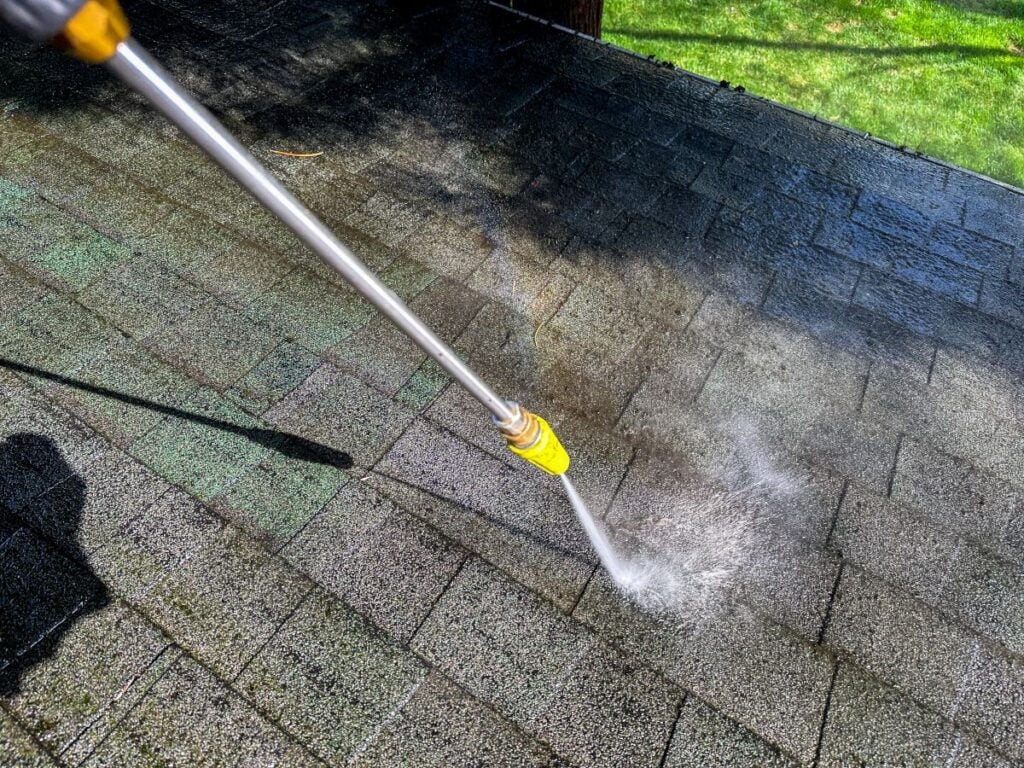
A roof covered in moss, algae, or heavy debris is not just a cosmetic issue. Those dark streaks that often show up on an asphalt shingle roof are typically caused by a blue green algae called gloeocapsa magma, which feeds on the limestone filler in shingles and leaves black streaks behind as it spreads. These organisms hold moisture against the shingle surface, which accelerates deterioration and can shorten a roof’s overall lifespan if the problem is allowed to persist. Cleaning is one of the simplest ways to protect a significant investment, and it typically requires far less effort than most other forms of roof maintenance.
Homeowners throughout Springfield and surrounding areas often notice black streaks or green patches developing on north facing roof slopes, where shade and moisture create ideal conditions for growth. Mold and mildew also tend to flourish in wet, rainy climates, and poor attic ventilation that allows moisture buildup underneath the roof deck can make surface growth worse over time. These patches tend to spread gradually over a season or two if nothing is done, which is part of why catching them early makes such a difference. Here is why addressing this matters more than it might seem.
- Prevents premature aging: Removing trapped moisture and organic growth helps shingles last as long as they are designed to.
- Preserves curb appeal: A clean roof noticeably improves how a home looks from the street, which matters even more if a sale is on the horizon.
- Protects manufacturer warranties: Some warranties specify approved cleaning methods, and improper cleaning can void coverage entirely.
- Reduces long term repair costs: Catching and addressing buildup early prevents more serious moisture related damage later, including rot in the decking underneath.
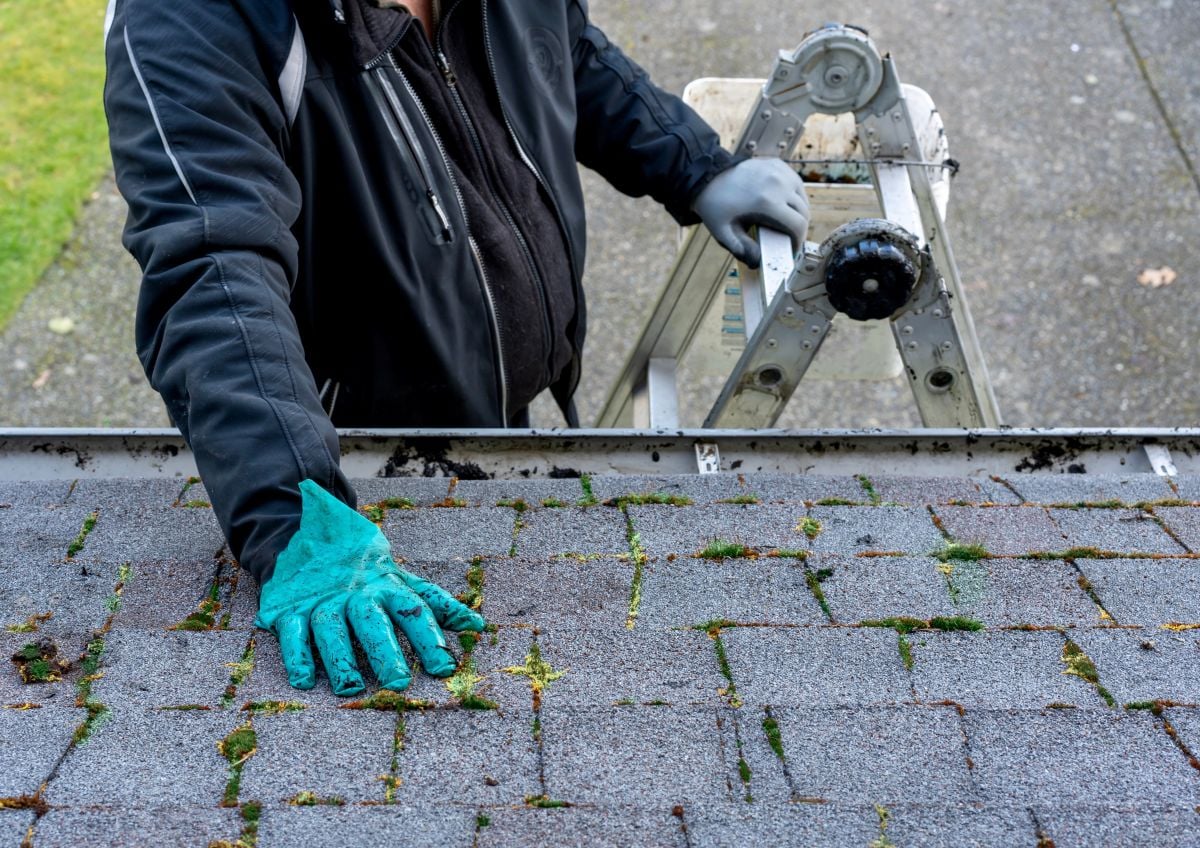
Cleaning a roof is not something that needs to happen constantly, but ignoring it for years at a time tends to catch up with homeowners eventually. Moss in particular can work its way under the edges of shingles as it grows, lifting them slightly and creating small gaps where water can eventually seep through. Understanding the safest and most effective methods available makes it much easier to keep a roof looking good and performing well.
3 Effective And Safe Methods For Cleaning Roof Shingles
Not every cleaning method is appropriate for every roof, and choosing the wrong approach can do more harm than good. Shingles are more delicate than they appear, and aggressive cleaning techniques can strip away the protective granules that keep them functioning properly. Once those granules are gone, they do not grow back, which makes gentle methods the safer default. Below are three methods that balance effectiveness with safety for the roofing material itself.
1. Soft Washing With A Cleaning Solution
Soft washing uses a low pressure sprayer, such as a pump sprayer or garden sprayer, combined with a cleaning solution to break down moss, algae, and grime without damaging the shingle surface. Chlorine based cleaners are effective at killing algae, and many homeowners use a bleach solution made with sodium hypochlorite, sometimes in the form of pool shock, mixed at roughly a one to one ratio with water for asphalt shingles. A small amount of dish soap can also be added to help the solution cling to the surface a bit longer. Always test any cleaning solution on a small, less visible area first to confirm it will not discolor the shingles.
The solution is typically allowed to sit for about 15 minutes before being rinsed away with clean water from a standard garden hose, working from the top of the roof down. Wearing safety goggles and gloves protects against splashback, and covering or thoroughly wetting down nearby plants beforehand helps protect them from runoff, since bleach based solutions can harm grass and landscaping if left untreated.
- Effective against most algae and light moss growth
- Gentle enough to avoid stripping granules from asphalt shingles
2. Manual Debris Removal
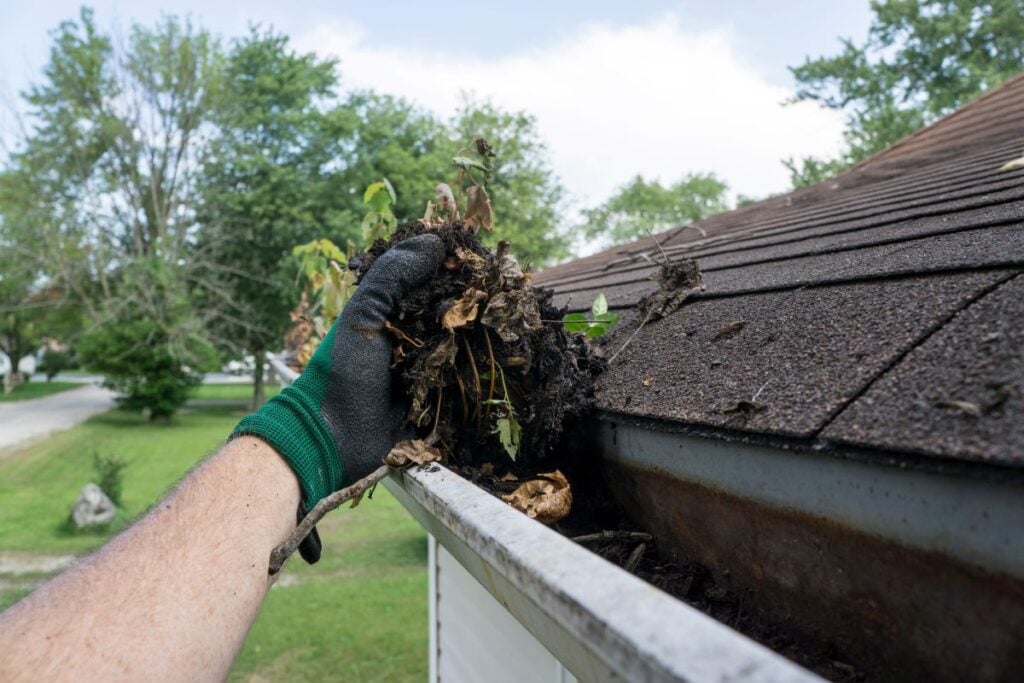
For roofs with heavier moss growth or accumulated leaves, dirt, and other debris, manual removal with a soft bristle brush or a leaf blower can clear debris from the surface before any liquid treatment is applied. This step is especially useful in shaded areas where debris tends to build up faster, since trapped leaves and twigs often hold moisture against the shingles even before moss has a chance to take hold. While up there, it also helps to inspect and clear gutters, since standing water in clogged gutters can contribute to the same moisture problems affecting the roof surface. Trimming overhanging branches back from the roofline reduces how quickly debris accumulates in the first place. Working from the top of the roof down also helps prevent debris from getting pushed back under shingles that are still clean.
3. Professional Roof Cleaning
Professional cleaning services use specialized equipment and cleaning solutions formulated specifically for roofing materials, along with the safety equipment needed to gain safe access to a roof surface without risk. This option is often the most reliable choice for steep roofs, hard to access areas, or homes with significant buildup that would otherwise require extensive scrubbing, since professionals can identify problem areas and adjust their approach based on the specific type of growth or staining present.

Choosing among these three methods often comes down to the extent of the buildup, the roof’s pitch, and how comfortable a homeowner is working at height. In many cases, a combination of manual removal followed by a gentle soft wash produces the best results without unnecessary risk, especially when the debris has been allowed to accumulate for more than a season or two.
What To Avoid When Cleaning A Roof
Just as important as knowing the right methods is understanding which techniques to avoid altogether. Certain cleaning approaches that work well on siding, driveways, or patios can cause serious and sometimes irreversible damage when used on a roof. Basic safety precautions matter here too, including using a properly secured ladder, wearing non slip footwear, using fall restraints on any roof with a steep slope, and avoiding roof work entirely during wet or windy conditions. The guidance below focuses mainly on an asphalt shingle roof, since clay tiles and metal roofs can call for different cleaning products and techniques. Homeowners in Springfield and surrounding areas should be especially cautious with the following, since a single mistake can end up costing far more than the cleaning itself was ever meant to save.
- Never use a pressure washer. High pressure water can strip protective granules from asphalt shingles almost instantly, leaving them exposed to UV damage and accelerating deterioration.
- Avoid harsh chemical cleaners. Anything not specifically formulated for roofing materials can damage shingles, harm nearby landscaping, or void a manufacturer warranty.
- Skip cleaning during extreme heat. Cleaning solutions can dry too quickly in direct sun, reducing effectiveness and potentially leaving streaks or residue behind.
- Do not walk on the roof unnecessarily. Foot traffic on shingles, especially when wet, can dislodge granules and create safety risks for anyone not experienced working at height.
- Choose a mild, overcast day when possible. Cool, cloudy conditions give cleaning solutions more time to work before evaporating, which improves results without needing a stronger mixture.
Avoiding these common mistakes goes a long way toward protecting both the roof and whoever is doing the cleaning. When in doubt, a more cautious, lower impact approach is almost always the safer choice, even if it takes a little longer to see results. A roof that looks slightly less clean after one gentle treatment is still in far better shape than one damaged by an aggressive method that seemed faster at the time. For longer term prevention, installing zinc or copper strips near the roof’s ridge can help inhibit future algae growth, since rainwater carrying trace metal ions washes down the roof each time it rains. Combined with regular cleaning and periodic gutter inspections, this small addition can meaningfully reduce how often a full cleaning is needed.
DIY Cleaning Versus Professional Cleaning
Deciding whether to clean a roof yourself or hire a professional often comes down to comfort with heights, the extent of buildup, and how much time a homeowner wants to invest. Both approaches can be effective when done correctly, but they come with different tradeoffs worth considering before picking up a ladder or making a call.
| Factor | DIY Cleaning | Professional Cleaning |
| Cost | Lower, mainly supplies | Higher, includes labor and equipment |
| Safety | Higher risk without proper equipment | Lower risk with trained crews |
| Effectiveness | Good for light buildup | Better for heavy moss or algae |
| Warranty considerations | Risk of improper technique | Typically uses approved methods |
Homeowners comfortable with ladder work and light cleaning tasks may find DIY methods sufficient for routine upkeep. For anything beyond light buildup, or for roofs with a steep pitch, professional cleaning tends to offer better results with significantly less risk involved, particularly when a warranty is on the line or the roof has gone several years without attention. Most homes do well with a cleaning every one to two years, though roofs shaded by large trees or facing north may need attention more often since those conditions tend to encourage faster moss and algae growth.
Keep Your Roof Looking Its Best With Roof Troopers
Cleaning roof shingles properly protects both the appearance and the long term performance of a roof, but doing it incorrectly can cause more harm than leaving it alone. Choosing the right method, avoiding common mistakes, and knowing when to call in help all make a real difference in how well a roof holds up over time and how long it takes before a full replacement becomes necessary.
Roof Troopers has helped homeowners throughout Springfield and surrounding areas keep their roofs clean and well maintained without risking damage to the shingles underneath. Our team knows how to identify the right approach for each roof’s specific condition, pitch, and material. If moss, algae, or built up debris has your roof looking worn, contact us today for a safe and effective cleaning solution.
Don’t pay for your roof until 2027!
0% APR, same as cash for 24 months
Get Started Today!
"*" indicates required fields