
If you have ever noticed gritty black or gray debris collecting in your gutters or around your downspouts after a rain, you were probably looking at roofing granules. Most homeowners do not think much about these tiny particles until the problem is already advanced. But roofing granules are the primary protective layer on every asphalt shingle, and their condition is one of the most reliable indicators of how much life your roof has left. Understanding what they do, why they fall off, and when their loss demands action can save homeowners significant money and prevent structural damage. This guide is designed for homeowners in McLean and surrounding areas looking for clear, practical guidance on what professional roofing contractors assess when evaluating granule loss.
Here is what you will learn in this guide:
- What roofing granules are and the multiple functions they serve
- The most common causes of granule loss on asphalt shingles
- How to identify early and advanced granule loss from the ground
- When granule loss can be repaired versus when it signals roof replacement
- How to slow granule loss and extend your roof’s effective lifespan
Why Granules Are the Most Underappreciated Part of Your Roof
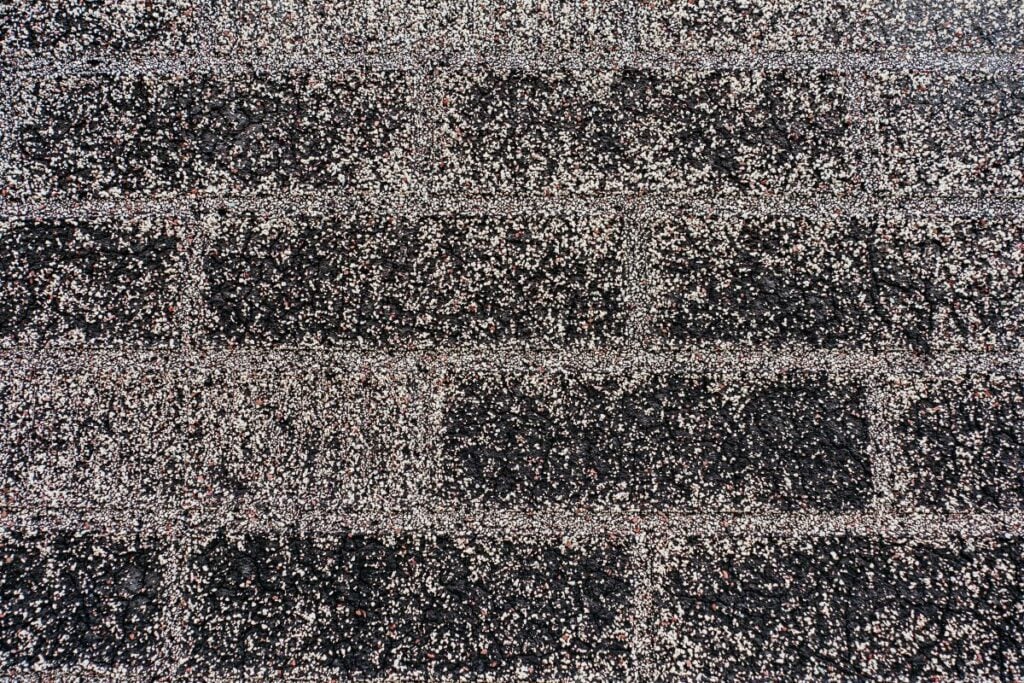
Granules do not look impressive up close. They are small mineral or ceramic particles embedded into the surface of asphalt shingles during manufacturing. Roofing granules are made of crushed stone and minerals, coated with ceramic pigments that provide blended colors and add dimension to the shingle surface. High-quality granules come in round and cubical shapes for better coverage, and they give shingles their textured, colored appearance. But their function goes well beyond aesthetics. According to industry data, asphalt shingle granules are responsible for up to 80 percent of a roof’s UV protection. Without them, the underlying asphalt binder is exposed directly to damaging sunlight, which accelerates oxidation, cracking, and loss of flexibility. A roof that is losing granules is aging faster than it should, and the timeline to replacement shortens with every season of unprotected sun exposure.
In a market like McLean and surrounding areas, where hot, humid summers put consistent pressure on roofing materials, granule integrity matters more than most homeowners realize. A shingle with intact granules can reflect heat and resist UV damage for decades. The same shingle stripped of its granule layer may begin deteriorating visibly within a few seasons.
- UV protection: Ceramic coated roofing granules act as a UV blocker, shielding the asphalt binder from ultraviolet radiation that causes drying, cracking, and brittleness. Once granules are gone, UV degradation accelerates significantly and cannot be reversed without replacement.
- Water resistance: Intact granules help water roll off the shingle surface rather than absorbing into the asphalt mat. Exposed asphalt absorbs water, which leads to swelling, softening, and eventually leaks at the shingle surface.
- Fire resistance and algae prevention: Mineral granules add a barrier against fire spread. Algae-resistant granules contain copper or zinc particles that can also prevent the growth of algae on roofs, a multi-faceted design benefit that extends shingle life in humid climates.
- Temperature regulation: Advanced solar-reflective granules and cool roofing granules are designed to reflect sunlight and reduce heat absorption, lowering indoor temperatures and HVAC load. Darker, bare asphalt absorbs significantly more heat, affecting both comfort and energy efficiency.
Granule loss is not a cosmetic issue to monitor passively. It is an active indicator of shingle health that determines how well the roof system is doing its most important job.
6 Common Causes of Roofing Granule Loss
Granule loss happens on every asphalt roof over time, but the rate and pattern of loss tells a story about why it is happening and what it means for the roof’s future. Some causes are benign and expected. Others indicate installation problems, weather damage, or accelerated aging that requires professional attention. Homeowners in McLean and surrounding areas who notice granule accumulation in gutters or downspout runoff should use the following causes to help interpret what they are seeing.
1. Normal Aging
Every asphalt shingle loses some granules as it ages. As the asphalt binder oxidizes and dries over time, it loses its grip on the mineral surface, and granules gradually loosen and wash away with each rain event. This process is slow and expected, typically becoming noticeable in the second half of a shingle’s rated lifespan. Minor granule accumulation in gutters on a roof that is 15 years or older is usually a sign of normal wear rather than a crisis.
- Minor accumulation in gutters is expected on roofs over 10 to 15 years old
- The rate of loss accelerates as the asphalt binder dries and loses flexibility
- Widespread bald patches signal that normal aging has progressed to replacement territory
2. Hail and Impact Damage
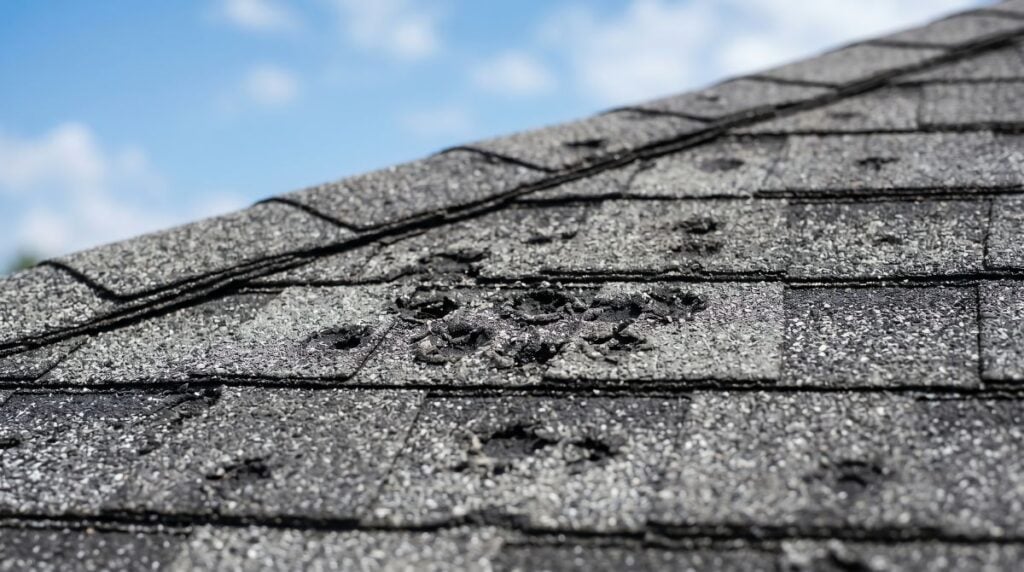
Hailstones can knock granules off shingles immediately and in large quantities during a single storm event. The impact bruises the shingle mat beneath, creating soft spots that continue to deteriorate after the storm passes. Hail damage often has a distinctive random pattern across the roof surface rather than the gradual, uniform loss associated with normal aging. Post-storm granule accumulation that is significantly heavier than normal is a clear signal to schedule a professional inspection.
- Hail impacts create circular bare spots where granules were knocked free
- Soft spots in the shingle mat under impact points continue to fail after the storm
- Hail damage is typically covered by homeowner’s insurance if documented promptly
3. Manufacturing Flash-Off on New Roofs
When shingles are new, some granules that were not fully embedded during manufacturing will shed in the first few months after installation. During production, granules are applied while the adhesive is still wet and pressed lightly into the surface for proper adhesion — any that were not fully seated loosen quickly once the roof is exposed to rain and heat. This initial shedding is normal and typically tapers off within the first 30 to 90 days. Persistent or heavy shedding on a relatively new roof beyond that period may indicate a product defect worth documenting and reporting.
- Light granule shedding in the first 30 to 90 days after installation is expected
- Heavy or ongoing shedding on a brand new roof warrants a conversation with the installer
- Document the issue with photos and notify the manufacturer through your contractor
4. Improper Foot Traffic
Walking on a roof without care for shingle surface contact knocks granules loose and can crack or dislodge shingles along the paths traveled. Contractors who work on roof-mounted equipment, gutter cleaners, and anyone else accessing the roof should know how to step and where to step to minimize surface damage. Granule loss concentrated in straight-line patterns often points to foot traffic as the cause.

- Damage from foot traffic tends to follow straight-line paths corresponding to walking routes
- Non-roofing contractors accessing the roof should be instructed on shingle-safe walking
- Avoid pressure washing the roof surface, which mechanically removes granules at a significant rate
5. UV Degradation and Heat Exposure
In climates with long, hot summers and high UV exposure, asphalt binders dry out faster, losing the flexibility and adhesion that hold granules in place. South- and west-facing slopes see more UV and heat stress than north-facing sections, creating uneven granule wear patterns across the same roof. Proper attic ventilation reduces heat buildup that accelerates this process from below.
- South- and west-facing slopes typically show earlier and more pronounced granule loss
- Light-colored granules reflect more heat and slow UV degradation of the underlying asphalt
- Adequate attic airflow is one of the most effective ways to reduce heat-driven granule loss
6. Moss, Algae, and Biological Growth
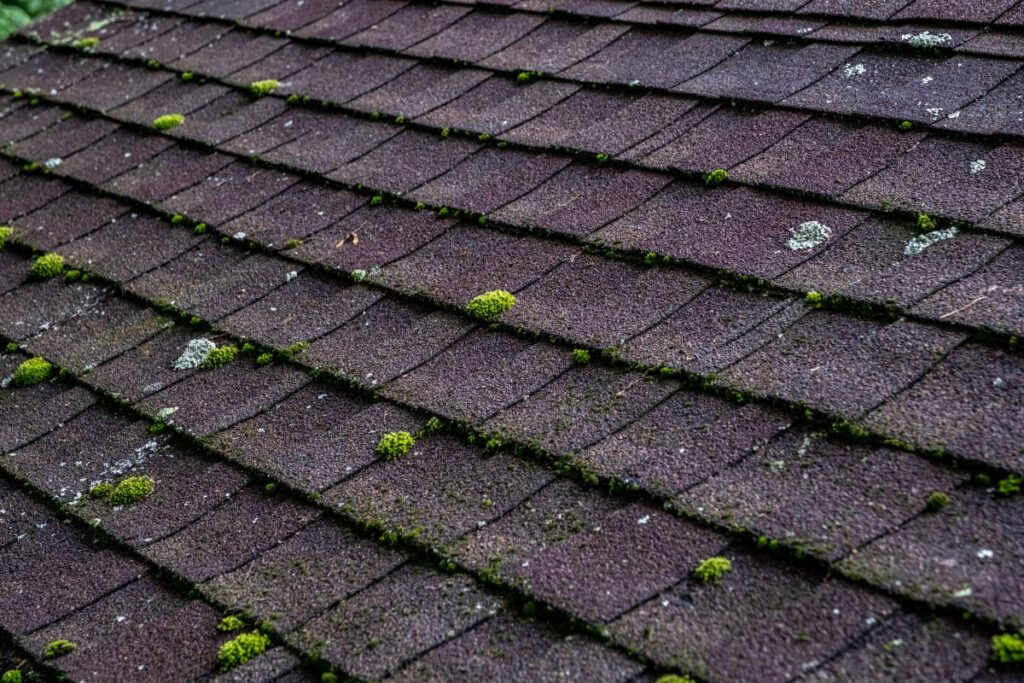
Moss and algae that grow on shingle surfaces penetrate between granules as they spread, physically dislodging the mineral layer. Moss in particular holds moisture against the shingle surface, accelerating breakdown of the asphalt binder and loosening the granule bond. Algae appears as dark streaking and does not immediately cause granule loss on its own, but creates the conditions for moss to establish over time.
- Moss physically lifts granules as it spreads and must be treated before removal to avoid further damage
- Copper or zinc strips installed near the ridge can inhibit biological growth over time
- Regular cleaning and treatment extends shingle life by preventing biological root penetration
Each of these causes calls for a different response, which is why identifying the pattern and likely source of granule loss is the right first step before deciding on a repair approach.
How to Spot Granule Loss Without Getting on the Roof
Inspecting for granule loss does not require getting on the roof, and homeowners should not climb up simply to check for this issue. Ground-level observation combined with gutter inspection provides most of the information needed to assess whether a professional inspection is warranted.
- Gutter and downspout inspection: After a rain event, check your gutters and the ground around downspout outlets. Granule accumulation that looks like coarse black or gray sand is the most direct and accessible sign of active granule shedding. Small amounts are expected on older roofs. A significant accumulation after every rain is worth investigating further.
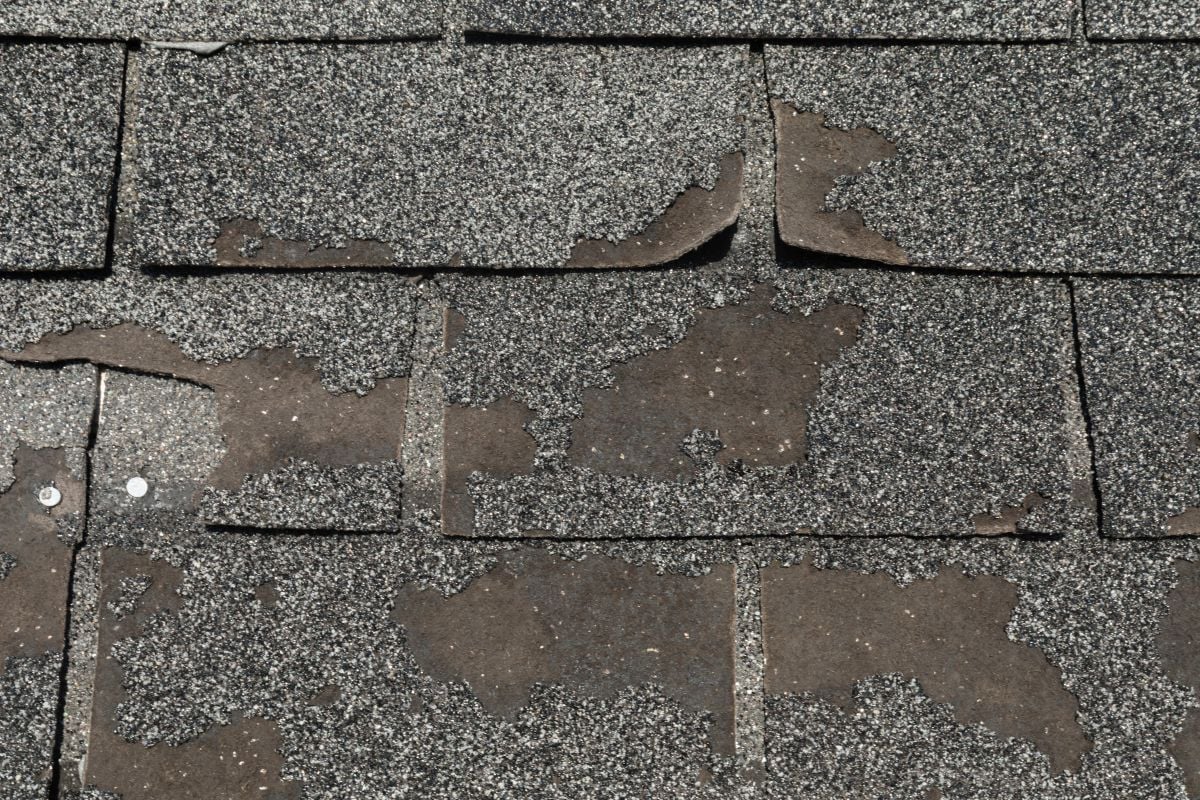
- Visual inspection from the ground: Look up at your roof from a safe distance using binoculars if needed. Bald or discolored patches where the shingle surface appears lighter, darker, or shiny compared to surrounding material indicate areas where granules have been lost. Uniformly lighter patches suggest widespread aging. Random circular spots suggest hail. Streaking or dark growth suggests biological causes.
- Attic inspection: Granule loss that has progressed to shingle surface cracking may allow moisture into the attic. Look for water staining on sheathing or insulation after heavy rain events. Any interior moisture in the attic is a signal that the exterior has been compromised and warrants professional evaluation.
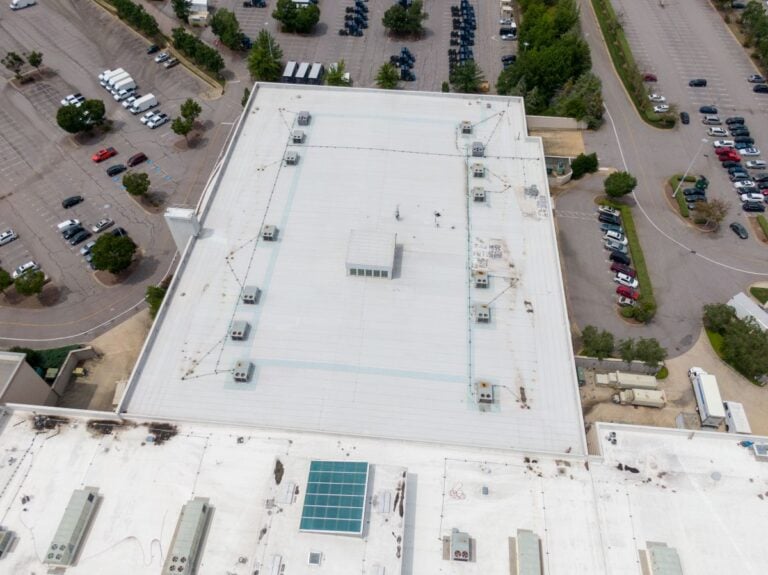
- A note on membrane roofing: Granules are not limited to asphalt shingles. Modified bitumen membranes also use granule surfaces to protect against UV exposure and premature aging. Mineral Shield granules are used for built-up membranes, and granule loss at side laps and end laps is worth monitoring closely since these seams are the most vulnerable points for water entry.
Whether your roof is asphalt shingles or a membrane system, the underlying principle is the same: granules are a functional layer, not a decorative one. When they go, the clock on your roof’s performance starts moving faster than it should.
When Granule Loss Requires Replacement Instead of Repair
The repair versus replace question depends on how much life the roof has left. A relatively new roof showing concentrated granule loss in one area may be a candidate for targeted shingle replacement. An older roof with widespread granule loss, bald patches, curling edges, and visible asphalt is nearing the end of its serviceable life, and continued repair investment may not be the most cost-effective path forward.
Repair is Appropriate When
The roof is less than 15 years old, the granule loss is concentrated in a specific area traceable to a known cause such as hail impact or foot traffic, and the surrounding shingles are otherwise intact with no widespread bald patches or cracking.
Replacement is the Right Conversation When
The roof is approaching or past 20 years old, granule loss is widespread across multiple slopes, the underlying asphalt is visibly exposed and cracking, or multiple repair events have addressed the same area without long-term resolution.
Storm Damage and Insurance
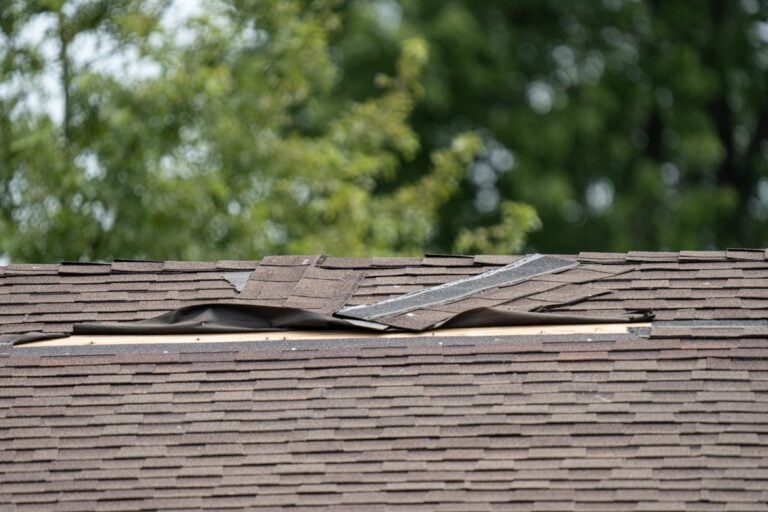
Hail and wind events that cause acute granule loss may qualify for insurance coverage, making the replacement calculation more straightforward. Document everything immediately after a storm event, including photographs of granule accumulation and visible impact marks on shingles. Prompt documentation is the foundation of a successful claim, and a professional contractor can help you understand what constitutes documented storm damage for your insurance provider.
Your Roof’s Granules Are Worth Taking Seriously
Granule loss is one of the earliest and most visible indicators that a roof system needs attention, and catching it early is almost always less expensive than waiting until the asphalt is fully exposed and leaks have developed. Roof Troopers serves homeowners throughout Northern Virginia, including McLean and surrounding areas, with thorough drone-assisted roof inspections that assess granule loss, shingle condition, and overall roof health. When you are ready to get an honest picture of where your roof stands, contact us today and we will take the guesswork out of it.
Don’t pay for your roof until 2027!
0% APR, same as cash for 24 months
Get Started Today!
"*" indicates required fields