
A brown ring on your ceiling is unsettling, but the situation gets genuinely confusing when you check every pipe, look in the attic, and find nothing obviously wrong. Water spots on ceiling but no leak is one of the most frequently Googled home problems for a reason: the stain is real, the damage is real, but the source is invisible. If you’ve already looked up and aren’t sure what your roof situation is, understanding what a thorough roof inspection actually uncovers is a good place to start before diagnosing further.
Here’s what this guide covers:
- Why ceiling water spots without an obvious drip are common and often misunderstood
- The 6 most frequent hidden causes behind these stains
- How to narrow down the source before calling a professional
- What the stain’s appearance and location can tell you
- When roof-related issues are the actual culprit even when there’s no active drip

Why This Problem Deserves More Attention Than a Coat of Paint
Painting over a ceiling water stain without fixing the source is the most common mistake homeowners make, and a previously painted-over spot can bleed through again if it was never sealed with an oil-based stain-blocking primer. The stain comes back, the moisture continues building, and by the time the problem becomes undeniable, there is often mold in the insulation, rotting wood in the framing, or a drywall section that needs full replacement instead of a simple touch-up.
Repainting alone will not hold unless the stain is first sealed with a stain-blocking primer after the source is fixed.
The reason so many homeowners underestimate ceiling water spots is that the stain and the source are almost never in the same location. Water follows the path of least resistance through insulation, along framing, and across ceiling joists before it finally shows up as a visible stain, often several feet away from where it entered. A stain near the center of a room might originate at a flashing joint at the roofline. A stain near a light fixture might be condensation from an HVAC duct running through the attic. The disconnect between where the spot appears and where the problem actually lives is what makes these situations so frustrating.
Understanding why ceiling water spots matter beyond the cosmetic:
- Mold risk: Mold can begin developing within 24 to 48 hours after materials become saturated. A stain that looks dry on the surface may be harboring active mold in the insulation layer above.
- Structural damage: Water that soaks repeatedly into ceiling joists and drywall weakens both over time. What starts as a stain can progress to soft, sagging material that requires significant structural repair.
- Energy efficiency: Wet insulation loses its thermal resistance. A moisture problem in the attic above a stained ceiling is often simultaneously driving up heating and cooling costs without the homeowner realizing the connection.
- Hidden escalation: Many of the causes behind these stains are ongoing rather than one-time events. Every time it rains, every time the AC runs, or every time someone takes a shower, the moisture source reactivates. The stain grows gradually, but the damage accumulates faster than it looks.
- Misdiagnosed roof replacement: Homeowners sometimes replace a roof to fix ceiling stains that have nothing to do with the roof. An accurate diagnosis saves money and solves the actual problem.

6 Most Common Causes of Water Spots on Ceiling With No Obvious Leak
The hidden nature of these causes is exactly what makes them so hard to find without knowing what to look for. In many cases, condensation, high humidity, or trapped moisture explain ceiling spots even when there are no active plumbing or roof water leaks, making a stain a subtle warning sign before you can narrow down the diagnosis. Each source has its own pattern, location tendency, and timing clue that helps narrow down the diagnosis.
1. Condensation From HVAC Systems and Ductwork
HVAC-related moisture is the single most common non-roof cause of ceiling water stains in Northern Virginia homes, and it’s also the one most frequently misidentified as a roof leak. Cooling systems naturally produce condensation as part of their operation. When that condensation escapes, it creates real water that drips onto ceilings and drywall just like a plumbing leak would.
The most common HVAC-related causes include:
- A clogged condensate drain line that can cause the emergency drip pan to overflow, especially when the air handler is in the attic
- A cracked or deteriorated drip pan that allows water to escape the unit
- Uninsulated ductwork that can sweat as cold air moves through metal ducts in a hot attic, then drip onto ceiling insulation and drywall
- Duct leaks where conditioned air escapes into the attic and creates condensation on surrounding surfaces
Proper insulation of HVAC ducts is a key prevention step for attic condensation problems, and checking attic insulation at the same time can help rule out related moisture issues.

The location clue: stains that appear directly below supply vents, in a linear pattern that follows a duct path, or near a ceiling-mounted air handler are strong indicators of HVAC condensation rather than a roof or plumbing issue. Infrared cameras can also help distinguish condensation from active leaks by showing temperature differences that point to trapped moisture behind surfaces.
2. Bathroom or Kitchen Exhaust Fans Venting Into the Attic
This cause surprises many homeowners because it looks like a roof problem and is often found directly below a roof penetration. Bathroom and kitchen exhaust fans are required to vent to the exterior, but in older homes throughout Falls Church and surrounding areas, these fans were sometimes ducted to terminate inside the attic rather than through a properly sealed roof or exterior wall cap.
When an exhaust fan vents into the attic, it pumps warm, moist air into an enclosed space. Condensation issues in areas with high humidity, such as bathrooms and kitchens, can stain ceilings even when no visible leaks are present. Rising steam can hit a cold surface at the ceiling, condense into droplets, and soak the drywall from the inside out. In winter, that moisture condenses on cold roof decking and framing, then drips down onto the ceiling below as it warms and melts. The stain often appears near the fan location itself, which is why it gets mistaken for a roof leak around the vent penetration.
Even fans that were originally installed correctly can develop disconnected or deteriorated duct connections over time, allowing moisture to dump into the attic instead of exhausting outside. The fix is reconnecting or replacing the duct and ensuring it terminates through a properly sealed exterior cap. Proper ventilation also means running exhaust fans during and after showers and improving airflow in bathrooms and kitchens.
3. Dormant or Intermittent Roof Leaks
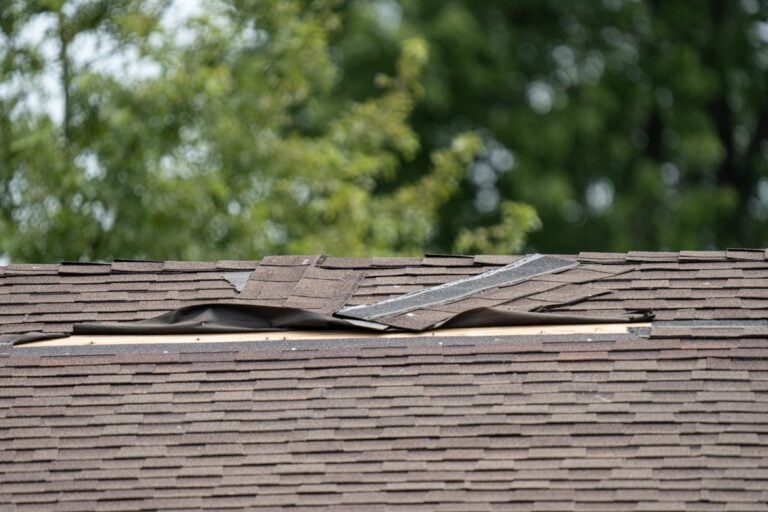
Not all roof leaks drip constantly. A roof that has a compromised section of flashing, a cracked or lifted shingle, or a failing valley seal may only allow water in during specific storm conditions, such as wind-driven rain from a particular direction, extended heavy rainfall that overwhelms normally adequate drainage, or ice melt backing up along the eave in winter. Even a tiny pinhole leak around flashing, a chimney, or a skylight can let water travel horizontally along a sloped rafter or drywall before it appears somewhere else.
Between those events, the roof appears perfectly functional. No drip, no visible wet spot, nothing obvious in the attic on a dry day. The stain on the ceiling below, however, grows slowly with each weather event as moisture saturates the insulation and wicks into the drywall.
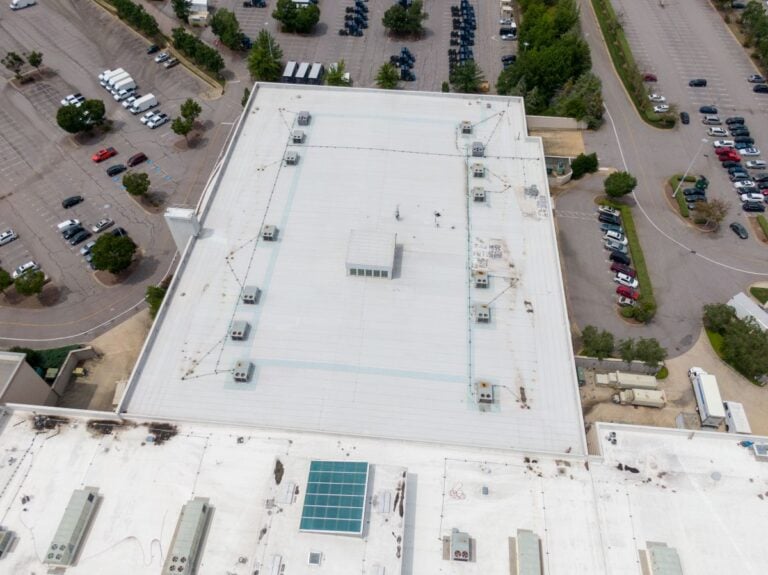
These dormant leaks are the most roof-related cause on this list, and they are the reason that ceiling stains in Falls Church and surrounding areas homes should always be evaluated by a roofing professional in addition to a plumber or HVAC technician. A thorough drone inspection of the roof surface can identify small failures in flashing, ridge cap sealing, and shingle integrity that aren’t visible from the ground or even from a quick attic check, including potential issues caused by storm wear or small leaks. When needed, trained technicians can also use moisture meters to trace roof-related moisture, identify hidden issues, and confirm where it is traveling.
4. Ice Dams in Winter
Ice dams are a seasonally specific cause that affects homes throughout Northern Virginia during cold snaps, and they produce ceiling stains that often appear weeks after the actual water intrusion event. Ice dams form when heat escaping from the living space warms the middle section of the roof, melting snow that then refreezes at the colder eave edge. The ridge of ice that forms at the eave traps water behind it, and that pooled water backs up under shingles where it is not designed to go.
Once water enters under shingles, it soaks roof decking, travels along joists, saturates insulation, and eventually appears as a stain at the ceiling below. Because the process happens over days or weeks, the stain may not appear until well after the cold weather event that caused it, leading homeowners to miss the seasonal connection entirely.
Ice dam water damage typically shows up as staining near exterior walls or along the eave line rather than in the center of the ceiling. If stains appeared in late winter or early spring in your Falls Church and surrounding areas home, ice dams are a strong candidate regardless of whether you saw icicles forming at the roofline.
5. Plumbing Condensation or Slow Plumbing Drips
Plumbing-related ceiling stains come in two distinct forms. The first is condensation on cold water supply pipes running through unconditioned attic space. In Virginia’s humid summers, cold pipes sweating in a warm attic can drip onto the ceiling below in a pattern that looks nothing like a typical plumbing leak.
The second form is a very slow drip from a joint, drain connection, wax ring, or supply line fitting that never produces enough volume to drip visibly but saturates insulation over weeks and months before showing up as a stain. Minor plumbing issues, such as small leaks or improperly sealed joints, are a common cause of stains in the ceiling directly below. A degraded toilet wax ring can also create hidden leaks that only stain the ceiling beneath an upstairs bathroom when the toilet is flushed. These slow drips are particularly common in homes where plumbing runs are aging and joints have lost their original seal gradually rather than failing all at once, and plumbing leaks may stay unnoticed for a long time.
Location tells a story here too. Bathrooms and nearby plumbing fixtures are the first places to inspect when stains appear beneath them, especially below a toilet, tub drain, or dishwasher, or along interior walls where pipes travel vertically, since plumbing issues are often the first diagnostic lead. A faint musty smell near the stain is an additional indicator, since slow moisture accumulation in enclosed spaces encourages mildew faster than a typical one-time leak event would.
6. Attic Condensation From Poor Ventilation and Air Sealing
Attic condensation is perhaps the most misunderstood cause of ceiling stains because it is one of several moisture issues caused by many small air leaks rather than one obvious failure. Instead, warm interior air seeps into the attic through dozens of small penetrations: recessed lights, plumbing vent boots, electrical penetrations, attic hatch perimeters, and gaps in the ceiling plane. Once that humid air enters the attic, it rises and meets cold roof decking and framing. The moisture condenses on those cold surfaces and eventually drips down onto the ceiling below.
In Northern Virginia homes, where temperature swings between warm interiors and cold attic spaces are significant throughout the fall and winter, attic condensation can saturate insulation gradually over an entire season. The signs in the attic include darkened or frost-covered roof decking, wet insulation, and occasionally visible mold on framing members, mold growth.
The key distinction between attic condensation and a roof leak is that condensation tends to create diffuse, widespread staining rather than a concentrated spot, and the attic itself shows no single obvious entry point for water. The fix is air sealing at every penetration in the ceiling plane combined with verifying that ventilation is balanced between intake and exhaust, not simply adding more insulation on top of existing gaps. These moisture problems, if left unaddressed, can worsen insulation damage and promotes mold growth.

How to Read Your Ceiling Water Stains for Clues
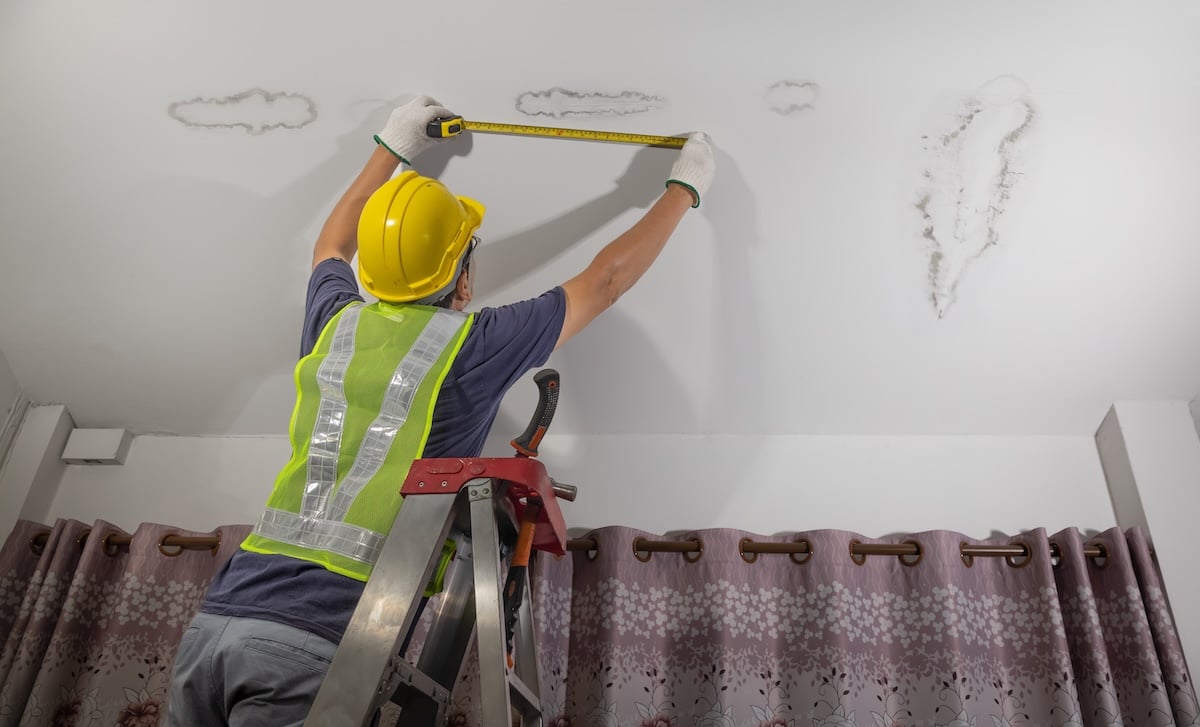
Before calling anyone, spend five minutes observing what the stain is telling you. The appearance, location, and timing of a ceiling water spot narrows the diagnosis significantly.
Color and Texture
- Yellow or light brown ring with a dry, crispy edge: Classic dried-water mineral deposit pattern. As water passes through ceiling materials, it can dissolve minerals and paint additives, which is why the stain often remains brown or yellowish even after drying. This may be a past event or an ongoing slow issue.
- Dark brown or gray with soft, wet-feeling drywall: Active or recent moisture that hasn’t dried. This requires urgent attention before mold develops.
- Straight-line pattern across the ceiling: Strongly suggests duct condensation or a pipe run above rather than a point-source roof leak.
- Dark streaks or spots near vents or light fixtures: Thermal ghosting can show up this way when a temperature difference makes certain ceiling areas collect dust or particulates more easily.
- Circular stain with no defined edge: Suggests moisture wicking outward from a single drip point, which could be a slow plumbing leak or a roof penetration above.
- Small isolated yellowish spots: These can also come from rusting drywall nails bleeding through the surface if non-galvanized steel fasteners were used.
Timing
- Stain appears or darkens after heavy rain: Roof or flashing issue as the primary suspect.
- Stain appears after running the AC, shower, or dishwasher: HVAC condensation or plumbing as the primary suspect.
- Stain appeared in late winter or early spring: Ice dams or attic frost as primary suspects.
- Stain appeared during summer heat without any rain: Condensation from HVAC ducts, pipes, or attic air is most likely.
Location
- Directly below a bathroom: plumbing first, exhaust fan second; condensation issues in high-humidity rooms like bathrooms and kitchens can also leave unsightly water spots even without visible leaks or obvious leaks.
- Near a supply vent or following a duct path: HVAC condensation; ghosting can also create visible water spots near light fixtures.
- Along an exterior wall or near the eave line: ice dam or roof flashing
- Near the center of the ceiling with no plumbing above: attic condensation or HVAC drip pan; the same pattern can show up on a kitchen ceiling when there’s no plumbing directly above.
Who Should You Call First? A Simple Triage Guide
Once you have read the stain for clues, the next question is practical: who do you actually call? Routing yourself to the wrong contractor first costs time and money. Here is a straightforward triage based on what your stain is telling you.
| What You See | When It Appears | Most Likely Cause | Call First |
|---|---|---|---|
| Stain directly below a bathroom, toilet, or tub | After flushing or showering | Plumbing | Plumber |
| Linear stain following a duct path, or below a supply vent | During or after AC use in warm weather | HVAC condensation | HVAC technician |
| Stain near an exterior wall or eave line | During or after heavy rain | Roof or flashing | Roofing contractor |
| Stain near an exterior wall, appeared in late winter or spring | After a cold snap or freeze | Ice dam | Roofing contractor |
| Diffuse, spread staining with no clear point source | During winter, worsens through the season | Attic condensation | Roofing contractor for attic assessment |
| Stain near or below a bathroom exhaust vent | Any season, worsens in humid months | Exhaust fan ducting into attic | Roofing contractor or handyman |
A few important notes on this table: stains do not always fit neatly into one category, and a roof that has both a flashing issue and poor attic ventilation can produce overlapping symptoms. If your stain does not match any single row clearly, or if you have ruled out the most obvious cause and the stain keeps returning, a professional inspection that covers both the roof surface and the attic is the most reliable next step.
Roof Troopers’ drone-assisted roof inspections also include moisture assessment, which means a single visit can rule the roof in or out as a contributing factor before you invest in HVAC or plumbing diagnostics. If the roof is not the problem, we will tell you that directly.
When the Roof Is Actually the Problem
It’s worth being direct: a ceiling stain is a warning sign of possible roof damage in a significant number of cases, even when there are no visible leaks or active drips to point to. Damaged flashing at chimneys, skylights, pipe boots, and wall transitions creates intermittent water entry that only shows up during the right storm conditions. Small defects around flashing can also let water in without obvious leaks. A single lifted shingle can allow wind-driven rain to enter at a volume that saturates insulation without ever producing a visible drip at the entry point.
This is exactly why ceiling stains, especially in homes over 10 to 15 years old in Falls Church and surrounding areas, warrant a professional roof inspection as part of the diagnostic process. Roof Troopers uses drone technology to assess the full roof surface, including difficult-to-reach areas around every penetration, valley, and flashing transition. Trained technicians can also use moisture meters to separate roof-related problems from other hidden issues before recommending necessary repairs. This gives homeowners a definitive picture of whether the roof is contributing to the problem before committing to plumbing repairs or HVAC work that may not solve anything.
Catching these issues early helps prevent costly repairs.
Customers who have worked with Roof Troopers consistently describe the team as thorough, transparent, and willing to tell them honestly when a full replacement isn’t needed. That kind of guidance matters when you’re trying to diagnose a stain without a clear source.
How to Fix a Water Stain on Your Ceiling
Once you have identified and resolved the source, fixing the visible stain is a straightforward five-step process. Do not start this until the source is confirmed fixed — painting over an active or unsealed stain will not hold, and the stain will bleed through the new paint within weeks.
- Step 1: Confirm the source is resolved. Give it at least one full rain event, one HVAC cycle, or one week of normal household use (depending on which cause was identified) before touching the ceiling. If the stain stays dry and does not grow, you are ready to proceed.
- Step 2: Let the area dry completely. Even after the source is fixed, drywall and insulation above it retain moisture. Allow a minimum of 48 hours with good airflow before priming or painting. A fan directed at the stained area speeds drying. If the drywall feels soft or spongy to the touch, it may need replacement rather than painting over soft drywall will not hold paint long-term and can harbor mold behind the surface.
- Step 3: Scrape any loose or peeling material. Use a putty knife to remove any flaking paint or chalky drywall surface at and around the stain. If there are small holes or indentations, fill them with spackle or lightweight drywall compound, let dry, and sand smooth.
- Step 4: Apply an oil-based stain-blocking primer. This step is not optional. A standard latex primer will not prevent a water stain from bleeding through the topcoat; the mineral deposits in the stain will push through latex paint regardless of how many coats you apply. Use an oil-based or shellac-based stain-blocking primer (Zinsser BIN or Kilz Original are the most widely available options). Apply one coat, and allow it to dry fully per the product instructions.
- Step 5: Repaint to match. Once the primer is fully dry, apply one or two coats of ceiling paint in the matching finish. If the stain covered a large area, painting the full ceiling plane rather than just the patch produces the most seamless result.
If mold is visible on the ceiling surface or suspected in the drywall or insulation above, do not paint over it. Mold behind a painted surface continues to grow and will eventually reappear. In that case, contact a certified mold remediation professional before any cosmetic repair is done. Roof Troopers does not perform mold remediation, but we can help you confirm whether the roof was a contributing moisture source before you start the remediation process.
Stop Guessing and Get Real Answers
A ceiling water stain without an obvious leak almost always has a fixable source. Finding it is the hard part, and covering it up only delays the moment when it becomes a much larger repair. To treat it properly, first identify and fix the source, then ventilate the area and gather a putty knife, damp cloth, and mild detergent before cleaning the stain, sealing it with an oil-based stain-blocking primer, and repainting; this helps reveal any hidden issues, including damp materials that can support mold spores and point to necessary repairs. Patch any holes with spackle or drywall compound before repainting to match, and if mold or high humidity is suspected behind drywall, targeted mold-control products may also be needed.
Roof Troopers serves homeowners across Northern Virginia, including Falls Church and surrounding areas. If your diagnostic process points toward the roof as a possible contributor, or if you simply want to rule it out before spending money elsewhere, contact us today to schedule a free inspection. Roof Troopers will give you a straight answer about what your roof shows, what it doesn’t, and what the right next step is for your specific situation.
Last Updated: August 31st, 2026.
FAQs
Is a water stain on the ceiling serious?
Yes. Ceiling stains indicate that water has already reached and saturated the drywall above, which means moisture has been present long enough to travel from its source to a visible surface. Even a stain that looks dry may have active mold developing in the insulation layer above it, since mold can begin growing within 24 to 48 hours of material saturation. Any unexplained stain warrants investigation before it is painted over.
What does a brown ring on my ceiling mean?
A brown or yellow ring with a defined, dry, slightly crusty edge is the classic pattern left by water that has wicked through drywall and then evaporated. As the water dries, it deposits minerals and paint additives at the outer edge of the moisture front, forming the ring. This pattern indicates a past or intermittent moisture event rather than a constant drip. The stain may look resolved, but the source that caused it is almost certainly still there.
Can a ceiling stain appear with no leak at all?
Yes. Condensation from HVAC systems, exhaust fans that vent into attic space rather than to the exterior, and temperature differentials between a warm interior and a cold attic can all produce real liquid water that saturates drywall and creates a stain without any leak from a pipe or roof penetration. These causes are covered in detail in the six-cause section above.
Should I just paint over a ceiling water stain?
Only after the source is fixed and the area is sealed with an oil-based stain-blocking primer. Painting directly over a water stain without priming first will not conceal it — the stain bleeds through latex paint regardless of how many coats are applied. And painting before the source is fixed guarantees the stain returns.
Don’t pay for your roof until 2027!
0% APR, same as cash for 24 months
Get Started Today!
"*" indicates required fields