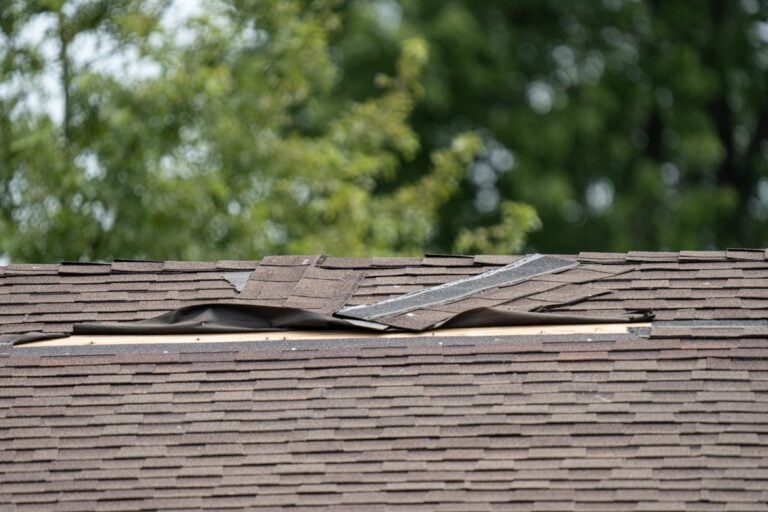
Severe storms and strong winds can strip shingles, loosen flashing, and leave a roofing system vulnerable to leaks within minutes, which is why knowing how to approach wind damage roof repair matters long before the next storm rolls through. Many homeowners underestimate how quickly a storm can wreak havoc on a home, but acting quickly and in the right order can prevent a manageable problem from turning into a much larger one, and understanding the process makes it easier to work confidently with a professional roofing team once the weather clears.
Here’s what this guide walks through:
- Why quick action after a windstorm makes such a difference
- The right order of steps to follow once the storm passes
- How to document damage effectively for insurance purposes
- What separates repair situations from replacement situations
- Answers to common questions homeowners ask after storm damage

Why Fast Action After Wind Damage Matters
Wind damage often looks minor from the ground, but even a handful of lifted or missing shingles can expose the underlying decking to water infiltration during the very next rainfall. Fallen trees and fallen debris can compound the problem further, sometimes causing structural damage that goes beyond the roofline itself. Homeowners in Burke and surrounding areas who wait too long to address storm damage often end up dealing with a much larger repair bill than if they had acted right away.
- Preventing water intrusion: Exposed areas of the roof can allow rain to seep into the attic and interior ceilings within a single storm cycle.
- Protecting the home’s structure: Prolonged exposure can weaken decking and framing, turning a surface level repair into a structural one.
- Supporting insurance claims: Prompt documentation and repair requests are generally easier to process than claims filed weeks after the fact.
- Avoiding secondary damage: Mold, mildew, and insulation damage can develop quickly once water finds its way toward a home’s foundation or interior walls.
Taking action soon after a storm passes puts homeowners in the best position to limit both the physical damage to their damaged property and the overall cost of getting everything repaired properly.
6 Steps to Take After Wind Damage to Your Roof
Knowing the right order of operations after a storm can make the entire process feel far less overwhelming. These six steps reflect the approach most homeowners in Burke and surrounding areas should follow after high winds move through the area.
1. Prioritize Safety First
Before inspecting anything, make sure the area around the home is safe. Downed power lines, fallen trees, unstable tree limbs, and debris scattered across the yard should all be addressed or avoided before anyone goes near the roof, especially if strong gusts are still moving through the affected area.
- Avoid climbing onto a roof immediately after a storm, especially if it is still wet or windy
- Keep children and pets away from any visible debris until the area has been cleared
2. Do a Visual Inspection From the Ground
Once it is safe to do so, walk around the exterior of the home and look for obvious signs of damage from a safe distance. Loose shingles, lifted shingle edges, dented gutters or metal flashing, and debris on the lawn are all indicators that the roof took a hit. It also helps to glance at the siding and exterior walls, since strong winds and hail can loosen shingles and damage other roofing materials at the same time.
3. Check the Interior for Signs of Leaks
Wind damage does not always show up clearly from outside, so checking the attic and upper floor ceilings for water stains, damp spots, or roof leaks is an important next step. Catching interior signs early can prevent more extensive damage later, since water that starts to seep in can spread quickly once it finds a path inside.
- Musty odors in the attic can indicate trapped moisture even without visible staining
- A flashlight check along the roof decking can reveal problem areas not visible from below
4. Document Everything With Photos
Thorough documentation is one of the most valuable steps in the entire process, both for insurance purposes and for giving a roofing company a clear starting point on your damaged property. Photograph damage from multiple angles, including wide shots of the roofline and close ups of the affected area.
5. Arrange for a Professional Inspection
A trained roofing professional brings the expertise needed to identify damage that is not visible from the ground or from photos alone, including lifted shingles that have not yet fully detached or flashing that has shifted out of place. A thorough roof inspection at this stage is essential before any repair work begins.

- A professional inspection often uncovers damage that would otherwise go unnoticed until the next storm
- Getting an inspection scheduled quickly helps avoid delays if temporary protection is needed
6. Schedule Repairs or Temporary Protection
Depending on the extent of the damage, this may mean scheduling repair steps to restore the existing roof right away, arranging for emergency tarping to prevent further water intrusion, or in more severe cases, planning for a new roof altogether. Either way, moving quickly at this stage helps limit how much additional damage accumulates while repairs are being finalized.
Following these steps in order helps homeowners avoid common mistakes, like climbing onto a compromised roof too soon or delaying documentation until damage becomes harder to trace back to the storm itself.

Documenting Damage for Insurance Purposes
Insurance claims tend to move more smoothly when damage is documented thoroughly and promptly after a storm. Taking a methodical approach here can make a meaningful difference in how quickly a claim gets approved.
- Photograph before any cleanup begins. Insurance adjusters want to see the damage as it occurred, not after debris has already been cleared away.
- Keep a written record of the storm date and conditions. Wind speed data and local weather reports can help support a claim if there is ever a question about the cause of the damage.
- Save all receipts related to temporary repairs. Emergency tarping or board up costs are often reimbursable, but only with proper documentation.
- Request a written inspection report from your roofing contractor. A detailed report carries more weight with an insurance company than a verbal description of the damage.
Homeowners who take these steps tend to have a much smoother claims experience, since insurance companies generally respond faster to well documented, clearly presented information. It is also worth checking with your provider before deciding whether to file, since some homeowners choose to avoid filing for very minor cosmetic damage that would cost more in future premiums than it would to pay out of pocket.
Repair vs. Full Roof Replacement After Wind Damage
Not every instance of wind damage requires a full roof replacement, but knowing which situation applies can be difficult without a professional opinion. Hail, heavy snow, and extreme heat can all compound wind damage over time, and the roofing materials involved, whether asphalt shingles or metal, also affect how well a roof holds up. Understanding the general guidelines can help homeowners set realistic expectations before an inspection.
| Factor | Repair Likely Sufficient | Replacement Likely Needed |
| Extent of missing shingles | Isolated to one section | Spread across multiple sections |
| Roof age | Under 15 years old | Nearing or past expected lifespan |
| Decking condition | No visible rot or soft spots | Rot or water damage present |
| Frequency of storm damage | First occurrence | Recurring damage over recent years |
| Underlayment exposure | Limited exposure | Widespread underlayment exposure |
| Standing water or pooling | Drains properly after rain | Water tends to pool in low areas |
A roof in Burke and surrounding areas that sustains isolated damage from a single strong storm is often a good candidate for a straightforward repair, while a roof already nearing the end of its lifespan may be better served by a full replacement once significant wind damage occurs.
Frequently Asked Questions About Wind Damage Roof Repair
These are some of the most common questions homeowners ask after their roof sustains wind damage. If a specific concern is not covered here, a direct inspection is usually the best way to get a clear answer.
How do I know if my roof has wind damage?
Missing or lifted shingles, granules collecting in gutters, and visible gaps along the roofline are all common signs. An interior check for leaks is also recommended even if the roof looks fine from the ground.
Will insurance cover wind damage roof repair?
In most states, wind damage is covered under standard homeowners insurance policies, though coverage details vary by provider and location. Prompt documentation and a professional inspection report can help support a smooth claims process.
How quickly should I get my roof inspected after a storm?
As soon as it is safe to do so. Getting an inspection within a day or two of the storm helps catch damage early and supports a timely insurance claim if needed.
Can I repair wind damage myself?
Minor issues like clearing debris can be handled safely from the ground, but shingle repairs and flashing work should be left to a professional due to the risks involved with climbing onto a potentially damaged roof.
What if my roof looks fine but I’m still concerned about damage?
A professional inspection is still worthwhile, since some forms of wind damage are not visible from the ground and can worsen over time if left unaddressed.
Understanding these basics can help homeowners feel more prepared and less overwhelmed the next time a strong storm passes through the area.

Get Help After Storm Damage
Wind damage can escalate quickly if it is not addressed properly, but knowing the right steps to take can make all the difference in protecting a home and minimizing repair costs. Acting quickly, documenting thoroughly, and relying on the expertise of an experienced roofing company are the keys to handling the situation well.
Roof Troopers has helped homeowners throughout the region respond to storm damage with honest inspections and prompt repair work. If your roof has taken a hit from recent high winds, contact us today for a free quote and to schedule an inspection.
Don’t pay for your roof until 2027!
0% APR, same as cash for 24 months
Get Started Today!
"*" indicates required fields